Convicted Felon Publishes "History" Book, Part 1.3

Click here for the previous part of this series.

Hitler the Revolutionary Socialist (continued)

D’Souza continues his characterization of fascism with militarism and capitalism. On militarism, he cites Stanley Payne again, noting that Payne believed (wrongly, I think, but it’s possibly beside the point here) militarism was not an essential feature of fascism. D’Souza says, “I mention this not to exonerate fascism and Nazism on this score, but to highlight that we should not confuse the incidental features of an ideology with its central characteristics.”[1] This is an interesting point to reflect back on D’Souza, particularly with regard to the nationalism and definition of nation inherent in fascism (on which see the last post in this series).

Regarding capitalism, D’Souza begins by calling Cornel West a “dummy” for believing that capitalism generally and big business specifically play large roles in neofascism (on which, note the distinction, which D’Souza himself includes in his quotation from West, between fascism and neofascism). D’Souza’s error here is in his conclusion of his section “defining” fascism: “Mussolini saw fascism as Hitler later saw Nazism: as a mechanism for rapid economic development operating through a framework that was not capitalist but rather collectivist, statist, and socialist.”[2]

This is a tremendous oversimplification of a complex issue, made patently wrong by its omission of a key term: corporatism. In his defense, D’Souza will broach this term later in the book, in his chapter on Mussolini, and we can address the specifics of fascist corporatism at that point in this essay, but for now, it should suffice to say the following.

Hitler did not view socialism or capitalism as being a mechanism for rapid economic development. While it’s certainly true that he viewed rapid economic development as a desirable goal, he had this view because of both the inspiration and the ultimate purpose of rapid economic development in Nazi Germany, i.e., rearmament. The extent to which socialism, capitalism, or some combination of the two would achieve this goal was a question that Hitler left often. More on this point below in addressing the 25 Points of the platform of the Nazi Party, specifically those parts of the platform ultimately abandoned by Hitler when he achieved power.

On Giovanni Gentile

D’Souza moves now to a lengthy discussion of the philosopher of Italian fascism, Giovanni Gentile. As already noted, part of D’Souza’s misrepresetation/misconstrual of Gentile stems from his failure to acknowledge how Gentile as a fascist conceptualized the state as the organic representation of the people or nation defined primarily ethnically. D’Souza’s initial observations about Gentle — some correct and some not — are less important ultimately than when he begins analyzing Gentile’s relationship with socialism.

Rightly, D’Souza acknowledges that Gentile is a critic of bourgeois like Marx but that their similarity ends there, but the author then goes promptly off the rails with his pronouncement that “Gentile was, in fact, a lifelong socialist.”[3] This is a statement that is not even remotely true, which D’Souza would know had he read Gentile’s Origins and Doctrine of Fascism, which he quotes in the epigram to the current section. Indeed, Gentile so thoroughly situates fascism as a counterpoint to socialism in that volume that it’s remarkable that D’Souza could come away with this conclusion honestly.

For instance, in the section of his essay entitled “The Fascist Doctrine of the State,” Gentile notes the considerable overlap between the ideologies of fascism and nationalism, then writing, “The relationship  between  the  individual  and  the  State  proposed  by  Nationalism  was  the  direct  antithesis  of  that  advanced  by  individualistic  liberalism  and  socialism.”[4]

Importantly, Gentile, as indicated by D’Souza, posits the individual nature of classical liberalism as being antithetical to fascism; however, Gentile is equally clear that socialism is on the liberal side of this dispute and not the fascist side. Thus is a core assumption of D’Souza’s undermined by one of his own sources. Remarkably, D’Souza’s discussion of Gentile and the philosophical underpinnings of fascism ignores the topic of syndicalism, although (as with corporatism) it is one he addresses in the next chapter.

Further Abuse

Lest we think this is the sole example of D’Souza’s abuse of sources, he’s only gotten started. The epigraph for the next section — “In Speech and in Deed,” comes from Walter Laqueur’s volume on fascism. As rendered by D’Souza, Laqueur wrote, “Fascism was not conservative at all in inspiration but was aimed at creating a new society with a new kind of human being.”[5] This quote is surprising easy to find in Laqueur’s book: it appears on the first page in slightly different from: “Fascism did not belong to the extreme Left, yet defining it as part of the extreme Right is not very illuminating either. In many respects, fascism was not conservative at all in inspiration but was aimed at creating a new society with a new kind of human beings.”[6]

Again, note the difference between D’Souza’s theory (fascism is an ideology of the far left) and what his source actually says (“Fascism did not belong to the extreme Left”). The reader gets the feeling that appeals to authority are being made for precisely the opposite effects originally intended. The remainder of this section of the chapter is dedicated to demonstrating that philosophies often different in theory and in practice, which should be obvious, before turning the Nazi Party platform. (He does take a moment to refer to the Italian way of doing things as “half-assed.”[6])

Finally, we get to the Nazi program. As if the title of his book had been forgotten, D’Souza writes, “If you read the Nazi platform without knowing its source, you could easily be forgiven for thinking you were reading the 2016 platform of the Democratic Party. Or at least a Democratic platform drafted jointly by Bernie Sanders and Elizabeth Warren.”[7] But is it really that close? Here’s the platform:

http://www.historyplace.com/worldwar2/riseofhitler/25points.htm

D’Souza notes that Robert Paxton pins the leftist planks of the platform the “left wing” of the party, led by the Strasser brothers. D’Souza even claims that the platform was cowritten by the Strassers. It was not: Hitler wrote it with the party founders, Anton Drexler, Gottfried Feder, and Dietrich Eckhart. That point aside, D’Souza writes, “At no point did Hitler repudiate the principles that he and the Strassers advanced at the outset.”

Is that true? Not hardly. Although the first ten platform planks were adhered to and implemented in one form or another, the 11th (no unearned income), 12th (no war profiteering), 13th (nationalization of trusts), 14th (profit sharing in big businesses), 17th (agrarian land reform), and 22nd (creation of a people’s army) were not, and these are arguably the most socialist of the planks of all. Even allowing for a moment the notion that the Nazis or some wing thereof might have been left wing in an economic sense at one point in theory, in practice, the ideology was not left wing and not socialist. Should the argument be made that a public health service constitute socialism, then it should be borne in mind that this program was created in Germany under Bismarck, himself no socialist.

D’Souza concludes the chapter by saying that Hitler was socialist but only for Germans — everyone else was excluded from the rights and protections under Nazi “socialism.” Again, we can wonder how true this statement is, given that socialism was decidedly not implemented in Germany under the Nazis, but perhaps more importantly, we should note that a core assumption of traditional socialism has been the notion of a brotherhood of man — a fraternity of all working people. One need only think of Marx’s “Workingmen of all nations, unite!” The idea of providing the benefits of socialism for the minority and subjugating the rest, whether proletarians or bourgeoisie, is profoundly unsocialist.

To be continued

[1] Dinesh D’Souza, The Big Lie: Exposing the Nazi Roots of the American Left (Washington: Regnery, 2017), 885.
[2] Ibid, 918.
[3] Ibid, 949.
[4] Giovanni Gentile, Origins and Doctrine of Fascism, With Selections from Other Works, translated edited, and annotated by A. James Gregor (New Brunswick, N.J.: Transaction, 2002), 25.
[5] Quoted in D’Souza, ibid, 1000.
[6] Walter Laqueur, Fascism: Past, Present, and Future (New York: Oxford UP, 1996), 13.
[7] D’Souza, ibid, 1039.
[8] Ibid, 1088.

Convicted Felon Publishes "History" Book, Part 1.2

Click here for the first part of this series.

Hitler the Revolutionary Socialist 

When D’Souza broaches the person of Hitler and the topic of National Socialism directly in his book, he does so by focusing on by what he considers to be the key characteristics of Nazism. Because Trump is the focus on D’Souza’s treatment of these characteristics, the first he discusses is insanity, which is not a characteristic of Nazism. To his credit, D’Souza points out that Hitler was likely not insane.

The next characteristic D’Souza addresses is the supposedly reactionary nature of National Socialism. Here some clarification is likely necessary. We are typically taught to think of reactionary as a term to refer to a position that seeks to establish a society resembling one from the past; thus, unlike conservatism, which would theoretically seek to maintain the status quo, reactionary politics would seek to turn the clock back (and progressivism to move it forward more).

Citing Corey Robin’s The Reactionary Mind, D’Souza alleges that the term reactionary “identifies the American right with the ‘fighting nostalgia’ that Hitler and Mussolini appealed to.”[1] Importantly, Robin cites Hitler and Mussolini in his book but only in passing and not to make fundamental points about conservatism, which he does see as a fundamentally reactive philosophy contingent on the threat or reality of revolution for its very justification.

Here, D’Souza seems to realize the peril of this association of both conservatives and fascists with reactionary viewpoints. If they are both concerned with restoring the past, then they must both be reactionary. Putting aside for a moment that conservatism, as noted earlier, is a relatively dynamic philosophy in terms of conserving the present, depending on what that present happens to be, D’Souza gets around this issue with claims about the past that Trump is attempting to restore being about jobs and small government and, most importantly, the ideals of the Founding Fathers. “So the Right,” he writes, “seeks to apply old principles – which it considers enduring or permanent truths – in our situation today to create a better future.”[2] This is not reactionary, he notes.

We could debate the specifics about whether Trump is conservative or reactionary and the extent to which these ideologies overlap. The key point is that D’Souza tries to establish a definition of reactionary that would not include turning the clock back – a definition that is inherently problematic. He recovers somewhat in then pointing out that neither Hitler nor Mussolini were reactionary. He quotes here from Stanley Payne, and Payne’s work here is indeed important.

Payne, in History of Fascism, divided the interwar European right into three categories: fascist, reactionary right, and conservative right. For instance, he characterizes President Paul von Hindenburg and Chancellor Heinrich Brüning, two of the men who held these positions in the year or two before Hitler did, as conservative right, but he characterizes men like Franz von Papen and Alfred Hugenberg – members of conservative parties who threw their lot with Hitler, as radical right. Hitler and the Nazis are classified by Payne as fascist.[3]

The “radicals” of Payne’s taxonomy would be the reactionaries – those parties seeking to turn back the clock to an earlier (in the case of Germany, before World War I) time. In contrast, fascists are revolutionary in their approach. This is a distinction both in goal and in tactics. The former regards the creation of something new, rather than a return to something old, although it bears mention that this new thing that fascism seeks to create is often imbued with some aspect (often mythic) of an earlier time, e.g., Italy’s echoes of the Roman Empire. The latter specifically pertains to violence.

Where D’Souza really seems to go wrong in this regard is in assuming that, because a philosophy or political movement is revolutionary, it must be left wing. It should be obvious that this notion is incorrect. As a counterexample, one need only look at Iran’s Islamic Revolution of 1979. There is no question that revolutionary ideas and tactics have been employed in Iran; there is also no question that the mullahs that have run Iran since 1979 are quite conservative – in fact, reactionary, proving it’s possible to be both reactionary and revolutionary (not that the Nazis or fascists generally were).

Moving on to authoritarianism, D’Souza concedes this characteristic is specific to neither left nor right and that there is no correlation between being authoritarian and being fascist (although obviously, the relationship does exist in the opposite direction). Of course, he also concludes that there’s nothing authoritarian about Trump. Then, he moves onto nationalism, and this is really where the rubber meets the road.

I noted in the last post that it’s odd that D’Souza doesn’t reference Roger Griffin anywhere in The Big Lie, given Griffin’s importance to the study of fascism. Frankly, to identify Anthony Gregor as the most important figure in the academic study of fascism and to omit Griffin entirely says far more about D’Souza’s heuristic than it does about either man. The key point that Griffin made about fascism was what he termed “palingenetic ultranationalism” as being the ideology’s core concept. Palingenetic refers to the idea of national rebirth through the reclamation of myth.

With nationalism, D’Souza appears to want to hedge his bets, particularly Trump’s rhetoric is identifiably nationalist. “Yes is nationalism or even ultra-nationalism sufficient to make one a fascist?” D’Souza asks. “Was Mussolini more of a nationalist than, say, Churchill or de Gaulle?”[4] Well, yes, he was. Other examples of nationalists, according to D’Souza, include Washington, Lincoln, Mandela, Castro, Guevara, Pol Pot, and Gandhi. Applying the term to such a broad group of people with such varying ideologies obviously does little to clarify what nationalism is.

What D’Souza either doesn’t know or refuses to admit is that a discussion of nationalism vis-à-vis fascism necessitates a focus on a particular type of nationalism, i.e., ethnic nationalism. The “nation” as the ethnic nationalist defines it is the collectivity of people who ascribe to the same “imaginary community,” as Benedict Anderson famously called it, united by language, culture, (sometimes) religion, and a shared history.

Thus, when D’Souza finally specifies the form of nationalism that unites (in his mind) fascism and the American left, he loses the plot: “This type of nationalism – let’s call it statist or collectivist nationalism – more closely resembles the American Left than the American Right, since the American Right holds, with Reagan, that ‘government is not the solution. Government is the problem.'”[5]

What D’Souza crucially misses here is how the fascist defines the collective and, thus, the state. In contradistinction to social contract theorists like Locke, who posited that the state was a necessary evil needed to exercise a monopoly of force to prevent violence from foreign states and between neighbors over property and thus should be kept small, the fascist notion of the state is quite different.

The state is the embodiment of the nation, according to the fascist. It is the expressed will of the nation, defined most commonly by ethnicity. It is not government of, by, and for the people – it is government that both overarches and transcends the people. As we will see, D’Souza goes to the original theorist of fascism – Giovanni Gentile – later in this chapter, but he seems to miss this key point. I humbly suggest that to read Gentile and not have absorbed the fundamental notion of the state as the organic collectivity of the nation as defined ethnically, linguistically, and culturally is equivalent to not having read Gentile at all.

The state is the embodiment of the nation, according to the fascist. It is the expressed will of the nation, defined most commonly by ethnicity. It is not government of, by, and for the people – it is government that both overarches and transcends the people. Unlike Locke and his intellectual disciple Jefferson, the government/state was therefore not something that could be done away with, lest the nation (i.e., people) itself cease to exist. As we will see, D’Souza goes to the original theorist of fascism – Giovanni Gentile – later in this chapter, but he seems to miss this key point.

There’s no question that this nationalism at the center of fascism and the strong government economic control at the center of certain left-wing movements and governments are both statist, but as I hope I’ve already demonstrated, a lack of economic freedom is not necessarily left or right wing politically, nor does it bear a necessary relationship with how permissive or repressive a society might be. Lest the objection be raised that statism requires economic control and thus a lack of economic control, we need only consider the People’s Republic of China, which since the death of Mao Tse-tung has pursued a course of heavily centralized state power with increasingly free capitalism.
 
But again, there is no clear and necessary relationship between statism and progressivism, as the anarchist and syndicalist tendencies on the left would clearly indicate. D’Souza is merely employing a straw man of big government progressivism to construct a logical fallacy. If: (premise) progressivism seeks big government, i.e., statism; and (premise) statism is a mark of fascism; then (conclusion) progressivism must be fascist. Not only is this conclusion false, but so are both premises.

To be continued. 

[1] Dinesh D’Souza, The Big Lie: Exposing the Nazi Roots of the American Left (Washington: Regnery, 2017), 783.
[2] Ibid, 793.
[3] Stanley G. Payne, A History of Fascism, 1914-45 (London, Routledge, 1995), 15.0
[4] D’Souza, ibid, 852.
[5] D’Souza, ibid, 874.

Convicted Felon Publishes "History" Book, Part 1.1

Perhaps more than any other conservative commentator of the last decade, Dinesh D’Souza has made his name trying to pin the sins of racism, segregation, and terrorism on the political left. The brunt of his argument in Hillary’s America was that the Democratic Party is the party of slavery, the Ku Klux Klan, Jim Crow, and segregation, and of course, historically speaking, he’s right. It was members of the Democratic Party by and large who were responsible for these outrages. That said, it’s a very different Democratic Party today than it was even 50 years ago.

D’Souza is now back with The Big Lie: Exposing the Nazi Roots of the American Left, an apologia for Trump and another attempt to paint the left with the brush of the far right. D’Souza attempts, like his predecessors Friedrich Hayek (The Road to Serfdom) and Jonah Goldberg (in Liberal Fascism), to demonstrate that fascism generally and National Socialism particularly were far left ideologies and not, as scholarly and popular consensus would have it, ideologies of the far right. This blog series will examine the specific claims that D’Souza makes in this volume.

The First Two Chapters

The first chapter of D’Souza’s book offers essentially an overture of things to come. There are no solid arguments so much as the introduction of the leitmotifs to which he returns throughout the book. It is really in the second chapter, entitled “Falsifying History,” that he deploys his first set of points. He actually starts off on sort of the right foot: he attempts to distinguish between conservatism and right-wing politics. However, in doing so, he begins some terminological sleight of hand that lays the groundwork for the rest of his book.

It’s important to distinguish between the right wing and conservatism. Rightly, D’Souza recognizes that what distinguishes one as conservative will depend on time and place. Whereas Edmund Burke, as the ur-conservative, was a monarchist, American conservatives are not. D’Souza’s claim that American conservatives “want to conserve the principles of the American Revolution,” which included “capitalism, political freedom or constitutional democracy, and freedom of speech and religion.”[1] He adds a few pages later that “American conservatives also seek to conserve the transcendent moral order that is not specified in the Constitution but clearly underlies the American founding.”[2]

There is much with which I could take issue so far, but these points of disagreement are largely beside the point. The key point here is that, while he does not explicitly state it, he identifies conservatism with the political right without acknowledging the distinctions that exist between the two or defining the right wing to any appreciable extent. As a result, D’Souza’s treatment of these key terms end up being drastically underdefined, allowing for their later abuse.

We can agree with D’Souza that conservatism has to do with maintaining a set of putatively objective values; similarly, in so far as we can stipulate that we might disagree on particulars, conservatives in the United States believe themselves to be true to the Constitution of the United States as a document that establishes limited government power and expansive rights. The problem with these definitions is not only their aforementioned shallowness but also their lack of relevance to the specific time and place of interwar Europe, in which fascism and National Socialism emerged.

As we will see, both conservatives and reactionaries during this period flourished who were not particularly wedded to the rule of law. However, they did ascribe broadly to traditional ideas about right and wrong, good and evil. In this regard, we can say that these parties were conservative to some extent, although clearly D’Souza’s specifically American designation doesn’t fit. Part of the problem that emerges with D’Souza’s text is that he does not recognize distinct social and economic barometers of “left” and “right” or “conservative” and “progressive.”

Determining Political Orientation

Briefly, if we adopt a political model that acknowledges distinct social and economic dimensions, we can possibly taxonomize people and groups a bit more constructively. We might agree, e.g., the economically the gamut would run from socialism to capitalism. On the left, socialism would include communism and democratic socialism, and on the right, capitalism would encompass varying levels of laissez-faire. We might just as easily label the left end of this continuum “equality” and the right end “freedom”; socialism assumes that the role of government is provide equal opportunity, if not equal outcome, while capitalism assumes that the role of government economically is to mind its own business, thereby maximizing economic freedom. We should note there that it seems D’Souza is comfortable with labeling socialism as left wing and capitalism as right wing.

The other axis, the social one, would also range from permissive on one end to repressive on the other. This axis measures the extent to which government plays a role in social conditions. The permissive end assumes that government should not intervene unless a dispute arises, and the extent to which this intervention takes place could vary along that end of the scale. Conversely, the repressive end assumes that government has a role in limiting personal freedoms to some extent for moral reasons or reasons not related to harm or damage caused to another person.

Without labeling the ends of this continuum just yet, we should that D’Souza’s own concession that conservatism is concerned with objective morals would place it on the repressive end. This is not to say that all forms of objective morality are repressive; rather, it is important to bear in mind that repression is the far end of that scale. Tendency in that direction would indicate acceptance of government limiting or banning certain behaviors, e.g., gay marriage, drug use, prostitution, etc., which arguably are “victimless crimes” or matters of moral relativism. Thus, we might label the permissive end of this continuum “liberal” and the repressive end “conservative.”

The following clarifications should be made before continuing. First, D’Souza, in a  seeming attempt to avoid confusion, uses “progressive” rather than “liberal” to connote the left, and this is a position with which I agree and so am following. Second, it is important to concede that, as we will see, fascist economic policies tended not toward the freedom end of the economic continuum but rather toward state control. This fact is complicated because the “socialist” end of that continuum would not necessarily pertain to state socialism; certain forms of anarchism and syndicalism would fall on that end as well. Nevertheless, the presence of constraints means the absence of freedom. Therefore, should we accept D’Souza’s argument thus far, fascism and National Socialism are political ideologies characterized by repressive social policies and statist economic policies. To the extent that the economic and social axes run from left to right, fascists are therefore socially right and economically left.

David Nolan’s chart below is a good, although not perfect, visual approximation of what we’re talking about. Fascists, per the argument here, would fall at the bottom. Notably, D’Souza would probably agree with locating them at this point on the Nolan chart. His disagreement would entail whether progressives belong there as well. However, this is a much longer debate and outside the scope of this series.

D’Souza Reviews the Literature

Returning to D’Souza’s book, a perhaps minor point is his assertion that “the Left seeks government authority to enforce and institutionalize progressive values,”[3] including abortion and gay rights. Important, he asserts that support for such positions indicates rejection of a transcendent moral order; thus, such a viewpoint would position progressives in either the liberal or authoritarian quadrants of Nolan’s chart – possibly the center. This point notwithstanding, D’Souza does not even acknowledge an anarchist left in this part of his argument.

Soon thereafter, D’Souza begins his attack on scholars he deems to be “progressive,” beginning with Robert Paxton, author of Anatomy of Fascism. D’Souza claims that Paxton is aware of fascism’s left-wing pedigree but that he consciously withholds this knowledge from the public, who naïvely consider fascism to be right wing. I guess as a kind of disparagement, D’Souza notes that Payne’s principal area of expertise is neither Germany nor Italy but France. He then writes, “Anthony James Gregor is the greatest living authority on fascism, and Stanley Payne recently published a definitive book on the history of fascism.”[4]

The choice of Gregor as D’Souza’s go-to expert is obvious – Gregor has repeatedly argued for a left-wing origin of fascism. Payne, for his point, has not, although selective quoting of him by D’Souza would seem to suggest otherwise. What’s perhaps most notable here are the experts D’Souza doesn’t cite: e.g., Ernst Nolte or Roger Griffin. Nolte would seem to be a natural choice for D’Souza, arguing as he did, that fascism was inherently anti-conservative; moreover, Nolte was a staunch political conservative. However, Nolte also argued that fascism was at its core an anti-Marxist philosophy – this point would complicate D’Souza’s argument too much. We’ll see where some engagement of Griffin would have undermined D’Souza’s presentation.

Hitler the Socialist

Following a passing assertion that Father Charles Coughlin was a leftist – suffice it to say that the National Union of Social Justice did not challenge Franklin Roosevelt from the left; if anything, it preached a “third position,” like fascist corporatism – D’Souza begins his treatment of National Socialism.

To be continued

[1] Dinesh D’Souza, The Big Lie: The Nazi Roots of the American Left (Washington: Regnery, 2017), Loc 576.
[2] Ibid, Loc. 597.
[3] Ibid, Loc. 620.
[4] Ibid, Loc. 681.

Softening the Ground

This post will probably be long and perhaps only tangentially connected to history, but it’s important, I think, to write down some things I’ve seen going on. I’m not alone in having seen these things, but perhaps can offer a perspective not yet put forward. My topics will be two, one specific and one general. They are, respectively, Stefan Molyneux and authoritarianism.

On Molyneux much has been said. Rather than retread old ground, such as allegations of cultish behaviors, blatant lying, perhaps most notoriously on Joe Rogan’s podcast, and rank hypocrisy against his own earnestly stated personal principles, it suffices here to say that, until a couple of years ago, Molyneux was marketing himself as an anarcho-capitalist or hard libertarian: lots of talk about free markets and rising tides lifting all boats. That sort of thing. Then, he took a disturbing turn, even for him.

Molyneux as a public figure has always been conservative and right wing (terms that intersect quite a bit but not entirely). However, the far right turn he’s taken over the last few years is more sinister. He’s begun broadcasting explicitly racist positions, including a lot of pieces on the race-IQ correlation, with his conclusion (unsurprisingly) being that this correlation is both overwhelmingly genetic and immutable. He’s blended in quite a bit attacking Islam generally, a subject with which I perhaps disagree with him less but that nevertheless he paints with an overly broad brush. Therefore, when Trump emerged politically, Molyneux was almost immediately on board, jettisoning in practice certain principles that, at least in theory, he’d long held, such as laissez faire (Trump is a protectionist) and moral absolutism (think about it for a second).

Of course, Trumpists aren’t rare and right wingers aren’t experiencing a shortage on the Internet, where Molyneux primarily resides. What’s disturbing about Molyneux’s case is the mainstream attention that he has received. Leaving aside an appearance on his YouTube channel a few years ago by Noam Chomsky, during which Molyneux largely kept his reactionary views to himself, Molyneux’s right-wing guests have run the gamut from mainstream conservatives (e.g., Dave Rubin) to fringe mainstream figures (Ann Coulter) to alt-right mainstays (Mike Cernovich). As a result, Molyneux now gets retweeted by the President’s sons, and this is where the danger really lies.

Before the general situation I mentioned above, however, a final specific point about Molyneux. His guest today (July 6, 2017) was Axel Kaiser, a Chilean writer and journalist with libertarian leanings who joined Molyneux to discuss “the untold story of Augusto Pinochet.” Kaiser presented the standard mainstream right-wing case, i.e., Pinochet was bad but Allende was worse. He argued that Allende intended to institute a Marxist totalitarian dictatorship (false), committed horrendous violence (partially true), etc., but I didn’t hear anything particularly surprising in what he said. Molyneux, however, pushed his luck. Isn’t it true, he asked, that Allende was arming leftist terrorist groups? They were being armed, Kaiser answered, but probably not by Allende. In fact, he continued, many of the most violent leftist rhetoricians of the Allende period shrank away in cowardice rather than have to fight the junta that Pinochet led. Molyneux responded that he found that most leftists preferred to exert statist violence against the helpless and wilted when having to face a real military.

The obvious counterexample of the Viet Cong aside, one must note what Molyneux is doing here. He is painting the left as an inherently violent body of ideologies. Now place this within a larger context of the last few months or so, during which we have seen an overexaggeration of leftist violence against Trump supporters and either denial or weak excuses for right wing violence, not to mention a complete lack of responsibility to answer for Trump’s clear exhortations to violence during the campaign. To be clear, violence is in general not something to be admired, and although the mere fact of punching a Nazi says more about the person that evokes such a response and how historically Nazis have had to be dealt with than it does about the person doing the punching, I accept as well that there is an inherent danger in defining the whole right as Nazis.

So we have the left being painted as violent and unhinged. Just think about the most recent episodes of right-wing outrage at Kathy Griffin’s ham-handed kabuki theater of beheading the President or at the staging of Shakespeare’s Julius Caesar in Central Park in New York with the title character decked out in Trumpian finery, and you’ll notice a trend. Now couple this with the ongoing attacks on the media. Last week it was a dust-up between the President and Mika Brzenzinksi. This week, it’s outrage that CNN found the creator of a video in which the President, in a clip from his WWE days, wrestles a person to the ground, the person having the CNN logo pasted over his face. “CNN has blackmailed this young man!” we are told by Molyneux and others. It is all part of a delegitimation of the left.

It’s worth noting that the interior logic here is sound, although the premises are heavily flawed. If the media against Trump is leftist, and leftists are violent, then of course the media are potentially violent enemies who would commit blackmail. That the U.S. media is overwhelmingly corporate, rather than liberal, is beside the point. So is the overwhelming lack of violence since the 1970s on the left, a large proportion of which supported a rather centrist candidate for President just a few months ago. The right has been significantly more violent in recent decades: the Order, Oklahoma City, and Eric Rudolph come to mind.

The most important question is where Molyneux et al. are going with this rhetoric. It seems to me that they are softening the ground for an authoritarian seizure of power. I’ve done my level-headed best to resist this position for the last several months, but it’s become increasingly clear that this is what is going on. Trump is elbows deep in scandal, and some of it will inevitably catch up with him. It seems unlikely to me that he will finish his term as President, although how his term will end is anyone’s guess. My wife suggests he has set the stage for an excuse of illness allowing him to resign. That’s possible, to be sure. Impeachment, the other realistic way that he leaves office other than illness or death (he’s 71 and obese), hinges on the majority party in the Congress, which is Republican in both cases. Obviously, there are Republicans who have taken (and a few who have even kept) principled stances against Trump, but they are few, and the majority of the party seems content to have Trump in office to rubber stamp whatever they are able to get passed, which seems to be the standard Reaganesque fare of deregulation, tax cuts, and making Americans poorer, dumber, and sicker.

If Trump were smart, he’d realize that he’d be impeached the minute he completed the Republicans’ legislative agenda. But he isn’t smart, as should be abundantly clear by now, and I’m a pessimist with regard to this agenda and how successful it will be. And then, if my predictions are correct, Trump will face impeachment. The question for consideration here is what the alt-right will do when he does. I suggest that they are preparing for a violent confrontation and are hoping that they have sufficiently prepared the armed population among them for when push comes to shove. They will not allow Trump to be removed from power against their will.

Is Trump involved in this? Probably not, although maybe his sons are. Certainly figures like Stephen Miller and Steve Bannon are, I’d imagine; neither of them seems terribly enamored of democracy. The most important question, it seems to me, is whether the President would go along with a scenario like this. Maybe the most important question of all is whether they will even wait until impeachment becomes a viable option or will allow some Reichstag Fire/9-11 type event, whether staged or genuine, to be zero hour.

So what can you do? I’d recommend reading Timothy Snyder’s excellent book On Tyranny and following the directions in there. Remember that what’s happening in this country isn’t normal by any stretch of the imagination and that defending democratic institutions and the rule of law is more important now than perhaps at any time in the last 150 years. Finally, whenever one of these people on the right wing wielding this rhetoric — whether Molyneux or Cernovich or one of their band of merry men — has a megaphone, be there to remind everyone within earshot what they are doing. They are preparing the stage to subvert democracy in this country. If that happens, then what happens next isn’t pretty, if history is any lesson.

Don’t let them win.

Lithuanian Coup of 1941

While the Holocaust in Lithuania is a topic that has been covered extensively in the historical literature, one related event that occurred as this tragedy unfolded, i.e., the attempted coup against the Lithuanian Provisional Government (PG) in late July 1941, has received comparatively little attention. For those scholars who have examined the coup, the explanation for it has been that the Nazis sought to remove the PG because of its persistent appeals for Lithuanian independence. However, while this conflict with the Nazis was certainly a factor, there were ulterior motives for the Nazi support of the coup, which are clarified through an examination of the primary sources. In particular, while European Jews had been subjected to increasing brutality for the first 21 months of the war, with the invasion of the Soviet Union, Jews would be subjected to pre-planned mass murder, beginning with communists and Jewish males of fighting age and eventually culminating in a decision to commit Europe-wide genocide. With this policy rapidly evolving, the Nazis attempted to overthrow the PG in late July 1941, not only to eliminate resistance to the incorporation of the Baltic States into the Greater German Reich but also to expedite the Final Solution in Lithuania. In doing so, the Nazis exploited the increasingly anti-Semitic society of Lithuania under Soviet rule, characterized in part by the far right led by followers of Augustinas Voldemaras. Upon occupying Lithuania, the Nazis found the most enthusiastic participants in anti-Semitic violence could be found among these followers, so they were the party that the Nazis backed in the coup. Investigating events before, during, and after the attempted coup clarifies the relationship of the Holocaust with the coup.
Historiographic Challenges
There are essentially three trajectories in the historiography of the Holocaust in Lithuania that characterize the writing about the topic over the past seventy years: the slow but eventual transition from intentionalism to functionalism; the increasing availability of archival documents; and the issue of Lithuanian guilt. Our understanding of the Holocaust is one that has been more shaped by functionalism than intentionalism at least since the 1990s when, not coincidentally, archival materials from the former Soviet Union first became broadly available. As a result, while Soviet control of postwar Lithuania discouraged an honest discussion of the Holocaust there, the last 25 years have been characterized by vociferous debate.
The intentionalist point of view, expressing the idea that the Nazis came to power with the intention of exterminating the Jews of Europe, was predominant in the historiography of the Holocaust until 1961. The functionalist viewpoint, which states that extermination was a decision reached gradually (in the summer of 1941 at the earliest), began to emerge in the literature when Raul Hilberg published The Destruction of the European Jews in 1961.[1]Hilberg theorized that the far-flung bureaucracy of Nazi Germany and competition among various ministries, the party, and the Schutzstaffel (SS) resulted in a gradual movement toward genocide. Martin Broszat’s Der Staat Hitlers, published in 1969, while not limited to the Holocaust, nevertheless argued that Nazi Germany, rather than being an autocratic state, was a polycracy that pushed forward and concretized vague agendas, thus obviating the need for a pre-existing plan or decisive order.[2]
The debate between historians who remained committed to intentionalism and those supporting functionalism raged mostly during the 1970s and 1980s, with the assumptions of moderate functionalists beginning to receive confirmation with increased access to Soviet archives. Daniel Goldhagen’s Hitler’s Willing Executioners, published in 1996, was likely the final gasp of a radical intentionalism based on the notion of inherent German evil. Goldhagen’s thesis of an “eliminationist anti-Semitism” lying at the heart of the National Socialist project, was greeted mostly by derision.[3]The prevailing functionalist viewpoint on the origins of the Holocaust is most succinctly stated in Christopher Browning’s The Origins of the Final Solution, published in 2006. Browning sees key roles for independent initiative and “cumulative radicalization” in the evolution of Nazi genocide.[4]
As noted, the increasing availability of sources was essential to the shift from intentionalism to functionalism. Some of these documents became available before 1991 and the disintegration of the USSR, including the Jäger Report, which describes in painstaking detail the course of the Holocaust in Lithuania through December 1, 1941. The report was provided to West German prosecutors by Soviet authorities in 1963 – four years after Karl Jäger’s suicide while awaiting trial. Given the extent to which the document corroborates the notion of cumulative radicalization, it is not surprising that Browning’s theory could only be truly supported by documents with access to Soviet archives.
In addition, Gerald Fleming’s Hitler and the Final Solution, published in 1984, was among the first works by a western historian to incorporate Russian archival material. [5] Although Fleming tended to take an intentionalist view of the Holocaust, his work nevertheless presaged the watershed of Soviet documents that entered the research a decade later. Fleming’s own work was not focused specifically on Lithuania but rather on Latvia. However, given the related policies implemented in these bordering countries, Fleming’s research boded well for the future historiography of the Holocaust in the Baltic States.
There are numerous reasons for the desire of the Soviets to limit access to archival documents relevant to the Holocaust in Lithuania. First, there was a desire to suppress the specifically Jewish nature of the majority of the victims of the Nazis in the Baltic States to perpetuate a mythos of fascist aggression against all Soviet peoples. Second and more important to this analysis, there was an impulse to suppress nationalism across the Soviet Union. This impulse was especially great in the Baltic States, whose incorporation into the USSR was highly contested by both the countries themselves and the outside world.
The Soviet offensive against Lithuanian nationalism was largely accomplished through the painting of all Lithuanian nationalists as collaborators with the Nazis. For instance, while it presents a collection of extremely important documents for understanding the Holocaust in Lithuania, the volume Documents Accuse, published in 1970 under the auspices of the government of the Lithuanian SSR, offers virtually no nuance in distinguishing blameless elements of the Lithuanian nationalist movement from those who committed war crimes.[6]Conversely, the roughly contemporaneous book by the Lithuanian-American historian Algirdas Budreckis, The Lithuanian National Revolt of 1941, published in 1968, specifically treats the period during which spontaneous violence by Lithuanians committed against Jews was most common. However, Budreckis glosses over this violence in fewer than ten pages and essentially ascribes it to a few bad apples.[7]
            This tension in the historiography was reflective of that between Lithuania and the USSR itself. It is little wonder, therefore, that Lithuania was among the first republics to declare its separation from the Soviet Union in 1991. While the dissolution of the USSR resulted in an abundance of newly available documents, this watershed of evidence has not abated the intensity of the debate over Lithuanian collaboration. While many Lithuanian historians have undertaken honest attempts to investigate the issue, others have espoused a theory of “double genocide,” which alleges that the Soviet occupations of 1940-41 and 1944-1991 were as bloody and genocidal as that of the Nazis.
Related to this dispute is the issue of Jewish collaboration with the Soviet occupation in 1940-41, which remains contentious due to its connection to anti-Semitic propaganda from the 1930s and 1940s. Perhaps the most controversial development regarding this aspect of the debate was the suggestion that the Lithuanian-born Israeli Holocaust historian Yitzhak Arad be prosecuted by the Lithuanian government for war crimes on the basis of his membership in a Soviet partisan group during the war.[8] Also central among the disputes today is the extent to which violence committed by Lithuanians against Jews, particularly the street violence and pogroms of the first few weeks of the Nazi occupation, was spontaneous or was directed behind the scenes by the German occupation authorities. This dispute is similarly unresolved.
Thus, the complexity of the historiography of the Holocaust in Lithuania has not decreased with time. However, the key factor complicating a fuller understanding of this difficult topic is the issue of Lithuanian collaboration, which has erupted in the last quarter century after being assumed during the Soviet period as universal by heavily biased court historians. There is still much to learn about this subject, but the ferocity of the current debate has at least generated an impressive amount of source material, much of it from the Lithuanian national archives, aiding significantly our attempts to attain a better understanding of this history.
Antecedents to the Final Solution in Lithuania
Jews had lived in the territory of Lithuania for centuries and had established Vilnius as a worldwide center of Jewish religious learning. Lithuanian Jews had enjoyed long periods of comparative tolerance, punctuated by outbursts of anti-Semitic repression. Such repression became more common upon annexation in 1795 to the Russian Empire, with its tradition of pogroms. These developments contributed both to the emigration of large numbers of Lithuanian Jews to the United States and elsewhere in the late 19th century and to the emergence of Lithuania as a major European center of political Zionism.[9]
Lithuanian independence came with the end of World War I, followed by several years of military conflicts with the Soviet Union and neighboring Poland, the latter of which occupied and annexed Vilnius in 1919. When the smoke cleared, the Lithuanian republic that was established represented a solid Lithuanian majority of more than 80% but with significant numbers of ethnic minorities and strong divisions based on these demographics. Jews constituted the largest minority, numbering between 5% and 7% of the total population. The political scientist Robert van Voren has characterized the relationship between the Lithuanian and Jewish populations as separate with “a sort of ‘buffer'” between them, consisting before the war of the “Tsarist bureaucracy” or “Polonized aristocracy” and subsequently the war-time German occupation authorities. Van Voren writes, “Both communities had their grudges against these three dominant ‘external’ powers, but now with them gone they had to deal with each other directly.”[10]Still, he maintains, given the large percentage of rural Jews living in shtetls with overwhelmingly Jewish populations, anti-Semitism was only active in the cities, where Lithuanians sought to enter a Jewish-dominated bourgeoisie.[11]
Following the adoption of a Lithuanian national constitution in 1922, elections were held for the national legislature, the Seimas. Jews received full political rights and were represented in the Seimas in a minorities bloc with Poles. This bloc held five seats out of a total of 78. This political power grew in subsequent elections in 1923 and 1926, in which an enlarged bloc that included Russian and German ethnic minorities won approximately 15% of votes. The election of 1926 was particularly controversial because, for the first time, the former ruling party, the Lithuanian Christian Democratic Party, was excluded from the government. The fears among right-wing Lithuanians of a “leftist” government were confirmed in their minds when the government signed a non-aggression pact with the USSR in September 1926.[12]
In response to the election, a coup was staged in December 1926, led by the Lithuanian Nationalist Union, which had won only three Seimas seats in the election, in concert with the Christian Democrats. The coup installed Antanas Smetona, one of the signers of Lithuania’s independence declaration, as president and Augustinas Voldemaras, a former prime minister and foreign minister, as prime minister. Ultimate power rested with Smetona, who instituted an authoritarian regime by dissolving the Seimas and ruling by decree.[13]
In some sense, the figures of Smetona and Voldemaras represent two important positions within the Lithuanian right wing for the country’s Jewish population. Smetona enjoyed the support of the Jewish population, who viewed him as a champion of Zionism and as their protector against the growing anti-Semitic violence seen in neighboring countries such as Poland. Nevertheless, as pointed out by Michael MacQueen, Smetona’s decision to nationalize the Lithuanian economy and create and empower a Lithuanian middle class resulted in increased anti-Semitism, egged on by Lithuanian Businessman’s Association. Smetona also oversaw the elimination of the Ministry for Jewish Affairs, which had existed since independence.[14]
In contrast to Smetona’s relatively benign authoritarianism and passive anti-Semitism, Voldemaras represented an explicitly fascist and potentially violent position. Although he began his political career as a mainstream figure, Voldemaras became increasingly radicalized over the course of the 1920s. In 1927, an organization he helped found, Gelezinis Vilkas (the Iron Wolf), emerged as a force in Lithuanian civil society. The organization was ultranationalist and explicitly anti-Semitic and answered largely to the personal whims of Voldemaras himself. The organization’s platform called for economic and political measures against Lithuania’s Jews, noting however that overt violence would be counterproductive at that time.[15]This position ultimately changed.
Lithuania in Crisis
Conflicts between President Smetona and Prime Minister Voldemaras culminated in the firing and internal exile of Voldemaras in 1929. The Iron Wolf was banned the following year. After a failed coup attempt in 1934, Voldemaras was imprisoned and subsequently exiled to France, although he would continue to exert tremendous influence. For most of the 1930s, Lithuania resembled most of the other dictatorships of Europe in being authoritarian but not particularly oppressive to minorities, with the obvious exception of Nazi Germany. Lithuania increasingly saw itself as a small, weak country situated between hostile, heavily armed neighbors. To the east, the Soviet Union sought some reconstitution of the Russian Empire under Soviet rule. To the west, the emergence of Nazi Germany was met in Lithuania with worry that the Nazis would attempt to reclaim Memel (called Klaipeda in Lithuanian), a formerly German city with a German ethnic majority that had been awarded to Lithuania as its sole port following World War I.
This tense situation worsened with a rapid series of geopolitical events beginning in 1938. In March of that year, Poland, which still possessed Vilnius, issued an ultimatum to Lithuania to establish diplomatic relations, which in essence forced Lithuania to acknowledge Polish rule over the disputed city. Lithuania relented to avoid war with a stronger neighbor. A year later, Germany issued an ultimatum over Memel, to which Lithuania again acceded. Unsurprisingly, a large number of Jews living in that region fled to the provisional capital, Kaunas, along with large numbers of ethnic Lithuanians. According to political scientist Roger D. Petersen, the annexation was a galvanizing moment in the history of Lithuanian nationalism, resulting in calls for national unity in the face of territorial loss.[16]
The outbreak of war in September 1939 and the consequent division of territory in Eastern Europe between the Soviet Union and Nazi Germany brought the crisis to a head. Smetona wanted to keep Lithuania neutral. However, the non-aggression pact between Hitler and Stalin had ultimately apportioned Lithuania to the Soviet sphere of influence. The Soviets first sought to force Soviet troops onto Lithuanian soil by posing yet another ultimatum to the country to accept 20,000 Red Army troops on its territory. As an enticement, the Soviets offered assistance in helping Lithuania to occupy Vilnius and the territory around it, with Lithuanian troops marching into the former capital on October 28. The event is particularly notable because it marks the first outbreak during the war of anti-Semitic violence on Lithuanian soil, although in this case, it seems to have been mainly violence committed by Poles against Jews and was largely contained by the Lithuanian military and police.
In June 1940, the Soviets forced Lithuania to accept an additional unspecified number of troops, the election of a “People’s Seimas” from a list of candidates approved by the Soviets, and finally the addition of Lithuania to the USSR as the Lithuanian Soviet Socialist Republic. On July 21, 1940, independent Lithuania ceased to exist. Virtually every historian writing about Lithuania during this period agrees that the year of Soviet occupation was decisive in bringing largely dormant anti-Semitic feelings to the surface.[17]Although a full examination of the topic is beyond the scope of this study, the core cause of this emergence was the perceived Jewish collaboration with the Soviets via the Lithuanian Communist Party (LCP), emblematized by the greeting by Lithuanian Jews in the streets of Red Army troops occupying Lithuania.
It suffices here to say that Jewish membership in the LCP was factually based but exaggerated and that most Jews, while not communists, nevertheless recognized that Soviet rule was preferable to rule by the Nazis. On the former point, Alfred Erich Senn wrote that the involvement of Lithuanian Jews in the LCP was largely a matter of the Soviets aiming to undermine Lithuanian nationalists by recruiting ethnic minorities[18]; to this end, the LCP had had such a large Jewish population that Lithuanian security sources during the period of independence considered the LCP to be a “Jewish party.”[19]On the latter point, Saulius Suziedelis writes, “Since most Lithuanians had underestimated, and many even approved, the growing anti-Semitic atmosphere of the 1930s, they tended to downplay the Jews’ very real fears.”[20] Conversely, Suziedelis notes elsewhere that, because Jews could see Soviet rule as preferable, “the politics and geopolitics of the war and occupation precluded an alliance with anti-Soviet ethnic Lithuanians, who increasingly perceived the struggle for independence as their exclusive affair.”[21]
The Beginnings of Collaboration
Formal collaboration between Lithuanian nationalists and Nazi Germany began, as noted below, before the war, but it crystallized with the founding on November 17, 1940, in Berlin of the Lithuanian Activist Front (LAF). Led by Kazys Skirpa, the Lithuanian ambassador to Germany who found himself stranded in Berlin with the Soviet occupation, the LAF was, in the words of Tomasz Szarota, “formed of representatives of a number of political parties or factions, but the truly powerful ones were the followers of former President Smetona, on the one hand, and the adherents of his rival, Augustinas Voldemaras, author of the failed fascist putsch of 7th June 1934, on the other.”[22]
As noted, the Smetona wing of the party could be considered one of authoritarian nationalists. The fascist Voldemarist wing, in contrast, had radicalized significantly since its founder’s ouster. For one thing, it had abandoned its earlier avoidance of anti-Semitic violence, at least in theory, for a more proactive position. In this vein, and due to shared ideological leanings, the Voldemarists had reached out the Nazis before the war had even begun. On July 19, 1939, for instance, Ulrich Dörtenbach, a legation councilor in the German Ministry of Foreign Affairs, wrote to Reinhard Heydrich, head of the Reich Security Main Office (RSHA) of the SS, reporting on the financial relationship of the government with the Voldemarists in Lithuania dating back a year and a half. Mentioning the plans of the Voldemarists, Dörtenbach wrote, “With regard to the pogrom-plans of the ‘Woldemaras Supporters’ [sic] it has to be said that for some time past the Lithuanian government has been working successfully towards the elimination of Jewry from Lithuanian economy. This has resulted in an ever-growing increasing emigration of Jews during the last years.”[23]Although the German government elected not to supply weapons at that time and expressed concern about how anti-Semitic violence might interfere with the German policy at the time of forced emigration, the letter nevertheless substantiates the awareness of the government, and more importantly of the RSHA, with the Voldemarists.
Further, on July 29, Heydrich forwarded Dörtenbach’s report to German Foreign Minister Joachim von Ribbentrop, with an addendum that read, in part:
In the middle of May it was decided to form a secret Lithuanian national socialist party. Its leaders are the most trustworthy members of the “Woldemaras Supporters”. The direction of the work within the Officer’s Corps is said to be in the hands of old members of the “Woldemaras Supporters”. Besides that, they are said to have one assistant who is on the personal staff of President Smetana [sic]. In order to make full use of antisemitic feeling in Lithuania it is intended to stage pogroms against the Jews.[24]
Heydrich’s note continues to make the same point as Dörtenbach’s, i.e., that weapons should not be supplied to the Iron Wolf because the flight of Jewish capital could be bad for the economy.
These contacts are supported by Lithuanian documents as well. For example, a bulletin from the Lithuanian State Security Department (Saugumas) dated April 15, 1939, stated, “There exist certain links between the Activists [i.e., those operating in Kaunas] and the German circles,”[25] speaking specifically of LAF members collaborating with pro-Nazi ethnic Germans from the Memel region. This information corroborates other Lithuanian documents cited by Budreckis, who states that cross-border infiltration between Lithuania and Nazi Germany in both directions on behalf of the LAF occurred throughout 1940.[26] Although Budreckis’s work should be approached with extreme caution due to his obvious goal of exculpating the LAF from charges of anti-Semitic violence, there is little reason why he would allege cross-border collaboration if it had not occurred.
Barbarossa and the Start of the Holocaust in Lithuania
Skirpa had wanted to accompany German troops into Lithuania on June 22, 1941, but was detained by the Nazis in Berlin and in fact remained there until 1944. At that time, he was sent into the concentration camp system, where he remained until liberation. Although Skirpa remained behind, the LAF in Kaunas was given advanced notice of the invasion and set immediately into action. They proclaimed a national uprising against the Soviets and violence erupted throughout the country, aimed at Red Army troops and real or perceived communists. However, the geography of the country and the plans of the invasion dictated that German troops would take two days to arrive in Kaunas, which still acted as the country’s capital. The city, and thus the country at large, was engulfed in an enormous vacuum of power.
In Kaunas, violence against Jews exploded onto the streets in an orgy of murder, rape, and looting. Numerous bystanders and survivors have commented over the decades on the widespread violence. Remarking on the outrages seven years later, survivor Yosef Gar wrote, “To curry favor with the Germans, the Lithuanian pro-Hitler element then began their anti-Jewish atrocities, hopeful through such deeds to convince the Nazis that, with regard to the killing of Jews, they could rely on the Lithuanians and they could fully trust them.”[27]Among the historical controversies that persist regarding this period of two days is the extent to which this violence was directed by any forces at all. Szarota writes that these “partisans,” as they called themselves, were unorganized and did not recognize the LAF’s authority.[28] Although it has been suggested that the Iron Wolf organized the street violence on these days, either with or without covert German support, absent compelling evidence to substantiate this theory, Szarota’s assessment seems the most likely.
Meanwhile, a group of LAF members in Kaunas met on July 23 and proclaimed a provisional government. Skirpa was recognized as prime minister, but in his absence, the education minister, Juozas Ambrazevicius, was elevated to the top position. Stasys Rastikis, a general and former commander of the Lithuanian Army, was named defense minister, although he was also in Berlin and would not arrive in Kaunas until July 27. Although they were all members of the LAF, none of the ministers in the PG were associated with the Voldemaras wing. Two days later, Heydrich commented on the Voldemarists in Operational Situation Report (OSR) 14, which he compiled in Berlin on July 6, 1941, on the basis of Einsatzgruppen reports sent from occupied territory. He wrote, “They reject Rastikis in principle because he is close to Christian-democratic circles.”[29]
When German troops entered Kaunas on June 24 and took control of one of the partisan bands roaming the city, the man who was put in charge was Algirdas Klimaitis, who was a Voldemarist. Although Szarota notes that he suspects contacts between Klimaitis and the RSHA occurred before the war, no evidence has yet emerged to substantiate this suspicion.[30] Klimaitis is particularly important because, in contrast to the street violence in Kaunas before the arrival of the Germans, he directed the first violent episodes in Kaunas with a clear leadership. On the night of June 25 and 26, Algirdas led a band of armed “partisans” to Vilijampole, a suburb of Kaunas with a large Jewish population, and conducted a mass pogrom. The significance of this pogrom, as noted by Suziedelis, writing with Christoph Dieckmann, is that, unlike the street violence of the previous days, in which it is likely that Jews were being attacked for putatively being communists, the attack on Vilijampole was an attack on Jews for being Jews.[31]
Notably, the same day, Franz Stahlecker, head of Einsatzgruppe A, one of the four mobile commando units that followed the Wehrmacht into the Soviet Union, Poland, and Baltic States in June 1941 and were deployed against political enemies and eventually Jews, arrived in Kaunas. Thus, whether as organized a pogrom against the Jews in Kaunas could have been organized without the SS remains an open question. For instance, in a Lithuanian article, Alfonasas Eidintas alleged that Stahlecker organized the pogrom directly, citing the testimony of Jonas Dainauskas, then leading the Saugumas, who claimed that the native security forces refused to participate. However, Dieckmann and Suziedelis write, “It is not unlikely that such talks did indeed take place. Yet, it remains unclear, what was exactly discussed, and what was the outcome of those talks.”[32] At the very least, we know that the Einsatzgruppe leader was aware of Klimaitis, because he reported it to his superiors. In OSR 12, Heydrich wrote that one of two partisan groups that existed in Kaunas was led by Klimaitis and numbered 600 men “in the main office of civilian workers.”[33]
Writing about the pogrom years later, Avraham Tory, who ultimately served as a member of the Jewish Council (Jüdenrat) once a ghetto was established in Kaunas, asserted that the Voldemarists led the pogrom:
Toward evening, suspicious Lithuanian characters appeared in the midst of the nervous crowds filling the streets, serving blows to Jewish passers-by. These Lithuanian thugs voice threats against the Jews: ‘Hitler will be here before long and will finish you off.’ That these attacks on the Jews were not accidental is attested by the fact that they took place simultaneously in different parts of town. In fact, it later became clear that the attackers were members of Lithuanian ‘partisan’ gangs, acting on the instructions of the fifth column of the indigenous local Nazis.[34]
Although it might be tempting to dismiss Tory’s ability to taxonomize elements of Lithuania’s far right, he was personally acquainted with members of the PG and was aware of the range of opinions on solutions to the “Jewish question” among these groups.
On June 27, perhaps the most notorious instance of the first week of the occupation occurred — an open massacre of 60 Jewish men by Lithuanian civilians in broad daylight on the property of the Lietukis Garage. Gar wrote, “As eyewitnesses from adjoining houses reported, dozens of Jews were killed by the murderers were car wrenches, spades and picks.”[35]Other witnesses reported water torture and beatings with iron bars. In any case, they all agree that the killing was public and that, while German troops looked on, they did not participate. Like the violence of the first two days, it remains unclear who directed the events at the Lietukis garage, although the likeliest explanation is unorganized violence committed by men recently released from a nearby prison run by the Soviet People’s Commissariat for Internal Affairs.
Reactions to the violence at the Lietukis Garage from the PG ran the gamut from denunciation and discomfort to statements of ideological support. Dieckmann and Suziedelis, citing Lithuanian documents, refer to government disgust at the events but also to Jews being held responsible for communist crimes.[36]They note further than the garage was only 200 meters from where the German 16th Army was then headquartered, so clearly the military could have chosen to stop the violence.[37]Dieckmann and Suziedelis took note of claims by individual soldiers who were present that Lithuanian mothers raised their children over their heads so the children could more easily watch the killing. Evaluating these accounts, they write, “This statement is likely to be the attempts of the German soldiers to mark the entire Lithuanian nation as brutal anti-Semitists, and, thereby, to make a more advantageous depiction that the killings executed by the Germans were far more ordered.”[38]
There is a note of truth in this last statement — if it is true that the killings of the first two days and those at the Lietukis Garage were mostly unorganized, then the pogrom in Vilijampole was certainly more ordered. In OSR 8, Heydrich wrote, “Lithuanian partisan groups had already in the last three days [before June 28, the date of the report from Einsatzkommando 1b in Kaunas] shot several thousand Jews,” providing a rough estimate of the number of Jews killed in Vilijampole and Kaunas proper in the first six days of Barbarossa — the vast majority of these victims must have been from the pogrom.[39] If nothing else, Klimaitis’s leadership during the pogrom had indicated that at least one Iron Wolf member was a reliable collaborator in anti-Jewish violence.
The massacre at the Lietukis Garage was essentially the last instance of public violence against Jews in Kaunas during the German occupation. In his book, Budreckis claims that it was the LAF that actually stopped the violence in the streets of Kaunas. Referring specifically to pogrom in Vilijampole, he writes, “A Communist band attacking in Vilijampole on the night of June 26-27, murdered twenty children … before it was liquidated by the LAF.”[40]Both because of Budreckis’s political agenda and because he does not indicate whether these children were Jewish, it is unclear whether he has confused the alleged communists with Klimaitis’s men or whether he has deliberately misled his readers. It is clear, however, that communist bands killing children in Vilijampole on the same night as the pogrom is highly unlikely.
Greater Organization and Speed
Regardless of why the public violence stopped, the next series of events indicates why the majority of Lithuanian Jews were still alive in the summer of 1941, but most had been murdered at the end of the year. On July 2, Einsatzkommando (EK) 3 arrived in Kaunas, led by Karl Jäger, who would go on to write the famous report of December 1, 1941, in which he claimed the Final Solution had been fully implemented in Lithuania. The important event on July 2 was the announcement by the PG of the format of military battalions called the National Labor Guard (Tautinio Darbo Apsaugos; TDA). Over the course of the previous week, calls had gone out for volunteers to join this force, and thousands responded. At the head of the TDA battalions was Jurgis Bobelis, a lieutenant colonel from the Lithuanian Army, who had been directly appointed by the PG. Szarota writes that Bobelis had been instrumental in disarming the “partisans” conducting street violence in Kaunas, some of whom undoubtedly enlisted in the TDA.[41]According to Dieckmann and Suziedelis, approximately 40% of the TDA men were enlisted men who deserted from the Red Army.[42]These men populated the lower ranks in the TDA. The officer corps was heavily populated by Voldemarists.[43]
Once formed, the TDA battalions rounded up thousands of Jews from the streets of Kaunas, driving them to the old Russian Seventh Fort on the outskirts of the city, where the PG was considering establishing a concentration camp. Jäger’s arrival portended something much more sinister. In two “actions” on July 4 and 6, these Jews were shot by two of the TDA battalions, with no German security police actually participating. While battalions authorized by the non-Voldemarist PG might seem contradictory, Suziedelis writes that Bobelis had only nominal control over the Seventh Fort and that Jäger organized the shootings.[44]The two battalions were led by Bronius Norkus and Kazys Simkus, both Voldemarists. Moreover, the chief of police in Kaunas, Vytautas Reivytis, was a Voldemarist as well. Norkus and Reivytis would ultimately be subordinated by Jäger to Joachim Hamann, a member of EK3 who led a mobile commando unit (RollkommandoHamann) that played the key role in the extermination of Jews in the countryside.
While the death toll from these two days at the Seventh Fort is uncertain, Tory wrote that 1,800 were shot on July 6 alone.[45] In OSR 19, dated July 11, Heydrich wrote that 7,800 Jews had been killed in Kaunas through that date, “partly through pogroms and partly through shooting by Lithuanian commandos.” He added, “Further mass shootings are no longer possible” and referred to plans to erect a ghetto in Vilijampole.[46] This ghettoization plan was announced on July 7. Regarding Heydrich’s assertion that mass shootings could no longer be performed, Dieckmann and Suziedelis report that the shootings had caused the Wehrmacht and Jäger’s EK, which seems likely.[47] Until the “Great Action” at the Ninth Fort in November, mass shootings of Jews in Kaunas were over, but the EK in Lithuania had learned on whom it could most rely.
The Voldemarist Coup
As ghettoization moved forward and the military occupation authorities ultimately moved on, a civilian administered was established by the Nazis. Reichskommissariat Ostland (RKO), to have its capital in Riga, Latvia, encompassed all of Estonia, Latvia, and Lithuania and much of Soviet Belarus. Hinrich Lohse was named as Reichskommissar. These facts were announced to the PG, which had repeatedly asserted its desire for independence, in mid-July. The PG did not hide its disappointment. In an extended commentary on the political situation in the Baltic States appended to OSR 40, Heydrich commented on the failed collaboration with the PG and wrote, “Meanwhile, all the old political organizations, for example, the Christian Democrats and the Popular Socialists, and the Voldemaras supporters are trying to gather their old members. Unconditional agreement with every political form arranged by Germany is to be expected only from Voldemarist circles and from the apolitical rural and small-town populations.”[48]
Commenting on Lohse’s assessment of the political landscape in Lithuania, Heydrich wrote in OSR 54, “To give the political situation a certain balance and to weaken the Activist forces, which are mainly recruited from former Christian Democrat circles, the Reichskommissar has thought of drawing the Voldemaras supporters more strongly into cooperation.”[49]Remarking on these developments, Szarota writes, “as time went on, the position of Voldemaras’s followers was growing in the Germans’ perception, particularly in military and police circles. Among the underlying factors was the group’s radically anti-Semitic ideology, close to the National-Socialist one.”[50]
Ultimately, the decision was made to form the Voldemarists into an independent party. It is unclear precisely when this occurred. As noted above, Heydrich wrote to von Ribbentrop that such a party had been formed in May 1939; however, it is unsure whether that same party still existed more than two years later. Budreckis writes that the Nazis enlisted the help of Pranas Germantas-Meskauskas, a former government minister and confidante of Skirpa whom the Nazis had brought to Lithuania from exile in Germany in June, to organize the Lithuanian Nationalist Party (LNP).[51] In contrast, Karlis Kangeris writes that the LNP actually approached the Reichskommissar for his support, citing a Lithuanian document from Adrian von Renteln, the Generalkommissar of the Lithuanian district, that reads, “With the aim of uniting all of the National Socialist forces in Lithuania into an organized and disciplined party, the LNP is striving to transform Lithuania toward an Axis ideology or to remodel it on the basis of National Socialism and fascism.”[52]
In either case, it is clear that the Gestapo and the LNP were cooperating by the time the LNP attempted its coup on the night of July 23. Budreckis and Dieckmann offer the most complete accounts of the coup in the non-Lithuanian literature. Budreckis, who relies on postwar Lithuanian sources, including General Rastikis, writes that the Voldemarist leadership occupied the Kaunas police headquarters and deposed Bobelis, replacing him with Simkus. The LNP arrested two PG ministers, and the PG, learning of the incidents, prepared for armed conflict. At the behest of the Gestapo, the LNP did not attack the government’s position. Instead, it moved against a command post where a battalion led by Rastikis was stationed, depending Rastikis’s resignation as well. He refused and asked the German general Robert von Pohl to intervene. Budreckis’s account ends with the LNP standing down after some mediation, although they continued to hold the command post.[53]
Dieckmann’s version, based in part on documents only available since 1991, seems more accurate. In his account, the standoff is mediated by Martin Kurmis, a German SS captain and Sicherheitsdienstagent of Lithuanian descent who played a key role in planning the invasion, and the LNP is appeased by the PG yielding the “top positions” in the administration to the LNP. Moreover, he writes, “The outcome of the coup meant increased willingness of the Lithuanian military and Lithuanian police to cooperate with the German side. The takeover of Lithuanian armed units by right-wing extremist forces certainly facilitated the mass murders that began soon afterward, especially of the Jewish population.”[54] 
The Aftermath
Lohse visited Kaunas on July 25, the day after the coup, as noted by Heydrich in OSR 35.[55] With the RKO firmly established by the end of the month, there was little point for the PG to continue. It met on August 5, drafted a resolution expressing its continued desire for full independence, and dissolved itself. Ghettoization of Kaunas’s Jews continued apace, and the ghetto was finally sealed on August 15. Around the same time, the Rollkommando Hamann, manned by Voldemarists, began its onslaught against Jews in the Lithuanian countryside, transforming the country into what Eric Haberer has called the “flashpoint of genocide.”[56] The LAF was almost immediately banned by the Nazi occupation forces and it rapidly transitioned its purposes toward resistance. The LNP itself was outlawed only a few months later, indicating that its primary purpose, beyond providing a possible alternative to the PG, was to be deployed against the Jews of Lithuania. Writing seven months later, Jonas Fledzinksas, the Lithuanian Agriculture Minister in the PG, summarized the Voldemarists thus: “The Lithuanian Nationalist Party, which was in fact merely the name of a small group of young and naïve political amateurs, realized that unconditional collaboration with Germany in certain circumstances would be a betrayal.”[57]
The damage, however, was done. In his famous aforementioned report, Jäger wrote, “I can state today that the goal of solving the Jewish problem for Lithuania has been achieved by Einsatzkommando 3. In Lithuania, there are no more Jews, other than the Work Jews, including their families.”[58]These “Work Jews” numbered 34,500 in three cities out of an original population of the nearly 200,000 who had lived in Lithuania less than two years earlier. The destructiveness of the Holocaust in Lithuania as a percentage of the original population killed was higher in that country than in any other country in Europe. Haberer writes, “While encouraged and utilized by the Germans, [violence against Jews] was, as such, not a creation of Nazi propaganda and ingenious organization. The eruption of mass violence as witnessed in Lithuania could not have been invented by fiat […] These were elemental destructive social forces that had been in the making for decades.”[59] Haberer might be overstating the culpability of the native populations of Eastern Europe, but there is little question that the LNP and the collaborators that it donated to the Nazi effort were instrumental in the costliness of the Final Solution in Lithuania.
Conclusion
            In conclusion, the evidence strongly indicates that the Nazis chose to back the supporters of Augustinas Voldemaras in the coup against the Lithuanian PG on July 23, 1941, in part to expedite the Final Solution in Lithuania. The desire of the Voldemarists to commit pogroms against Lithuanian Jews had been expressed years before the German occupation. Once the occupation began, through figures such as Klimaitis and Norkus, the Voldemarists had established themselves as the most reliable among native Lithuanians to commit acts of violence against Lithuanian Jews. Therefore, the Voldemarists would have been seen by the Nazis as the most fitting party to receive Gestapo support. This strategy of the Nazis clearly paid off: in terms of the percentage of Jewish lives lost; Lithuania had the highest death toll of any country during the Holocaust. Controversy might persist over the exact role of Lithuanian collaborators in this cataclysmic series of events, the thorough destruction of Lithuania’s Jews is indisputable.


Bibliography
Primary Sources
Bulletin No. 92 from the Lithuanian State Security Department. Bulletin, April 15, 1939. In Documents Accuse. Edited by B. Baranauskas, K. Ruksenas, and E. Rozauskas. 62-63. Vilnius: Gintaras, 1970.
Dörtenbach, Ulrich. Memorandum to Reinhard Heydrich, memorandum, July 19, 1939, Nuremberg Document 2592-PS. Nazi Conspiracy and Aggression, Volume V. Library of Congress, Washington, DC, 655-56.
Fledzinskis, J. “Report of the Director General of the Lithuanian Economics Ministry, J. Fledzinkis [sic], regarding the occupation of Lithuania and statistical data regarding Jews in Lithuania, Germany and Vienna, 1941-1942.” February 2, 1942. Record Group O.82, File Number 4. Baltic Countries Collection. Yad Vashem Digital Archive, Jerusalem.
Gar, Yosef. Umkum fun der Yidisher Kovne. Munich: Farband fun Litvishe Yidn in der Amerikaner Zone in Daytschland, 1948.
Heydrich, Reinhard. Ereignismeldungen UdSSR. Record Group 14, 101M.0082. United States Holocaust Memorial Museum, Washington, DC.
———. Letter to Joachim von Ribbentrop, June 29, 1939. Nuremberg Document 2953-PS. Nazi Conspiracy and Aggression, Volume V. Library of Congress, Washington, DC, 657-58.
Jäger, Karl. “Gesamtaufstellung der im Bereich des EK.3 bis zum 1. Dez. 1941 durchgeführten Exekutionen.” December 1, 1941. Accessed May 1, 2017. http://phdn.org/archives/
holocaust-history.org/works/jaeger-report/htm/img001.htm.en.html.
Tory, Avraham, Martin Gilbert, and Dina Porat. Surviving the Holocaust: The Kovno Ghetto Diary. Cambridge, MA: Harvard University Press, 1990.
Secondary Sources
Budreckis, Algirdas Martin. The Lithuanian National Revolt of 1941. South Boston, MA: Lithuanian Encyclopedia Press, 1968.
Dieckmann, Christoph. Deutsche Besatzungspolitik in Litauen, 1941-1944, 2 vols. Göttingen, Germany: Wallstein, 2016.
Dieckmann, Christoph, and Saulius Suziedelis. Okupacija Ir Aneksija: Pirmoji Sovietine Okupacija, 1940-1941 = Occupation and Annexation : the First Soviet Occupation. Totalitariniu rezimu nusikaltimai Lietuvoje. Vilnius: Margi Rastai, 2006.
Eidintas, Alfonasas. “A ‘Jew-Communist’ Stereotype in Lithuania, 1940-1941.” Lithuanian Political Science Yearbook, January 2000, 1-36.
Haberer, Eric. “Intention and Feasibility: Reflections on Collaboration and the Final Solution.” East European Jewish Affairs 31, no. 2 (2001): 64-81.
Kangeris, Karlis. “Kollaboration vor der Kollaboration? Die baltischen Emigranten und ihre ‘Befreiungskomitees’ in Deutschland 1940/41.” In Okkupation Und Kollaboration (1938-1945): Beiträge Zu Konzepten Und Praxis der Kollaboration in der Deutschen Okkupationspolitik, edited by Werner Röhr, 165-90. Berlin: Hüthig Verlagsgemeinschaft, 1994.
MacQueen, Michael. “The Context of Mass Destruction: Agents and Prerequisites of the Holocaust in Lithuania.” Holocaust and Genocide Studies 12, no. 1 (Spring 1998): 27-48.
Petersen, Roger Dale. Resistance and Rebellion: Lessons from Eastern Europe. Cambridge: Cambridge University Press, 2001.
Senn, Alfred Erich. Lithuania 1940: Revolution from Above. Amsterdam: Rodopi, 2007.
Suziedelis, Saulius. “Foreign Saviors, Native Disciples: Perspectives on Collaboration in Lithuania, 1940-1945” in Collaboration and Resistance During the Holocaust: Belarus, Estonia, Latvia, Lithuania, edited by David Gaunt, Paul A. Levine, and Laura Palosuo, 313-59. Bern, Switzerland: Peter Lang, 2004.
———. “The Historical Sources for Antisemitism in Lithuania and Jewish-Lithuanian Relations During the 1930.” In The Vanished World of Lithuanian Jews, edited by Alvydas Nikzentaitis, Stefan Schreiner, and Darius Staliunas, 119-54. Amsterdam: Rodopi, 2004.
———. “Lithuanian Collaboration during the Second World War: Past Realities, Present Perceptions” in “Kollaboration” in Nordosteuropa: Erscheinungsformen und Deutungen im 20. Jahrhundert, edited by Joachim Tauber, 140-63. Wiesbaden, Germany: Harrassowitz, 2006.
Szarota, Tomasz. On the Threshold of the Holocaust: Anti-Jewish Riots and Pogroms in Occupied Europe: Warsaw, Paris, the Hague, Amsterdam, Antwerp, Kaunas. Translated by Tristan Korecki. New York: Peter Lang, 2015.
Voren, Robert van. Undigested Past: The Holocaust in Lithuania. Amsterdam: Rodopi, 2011.
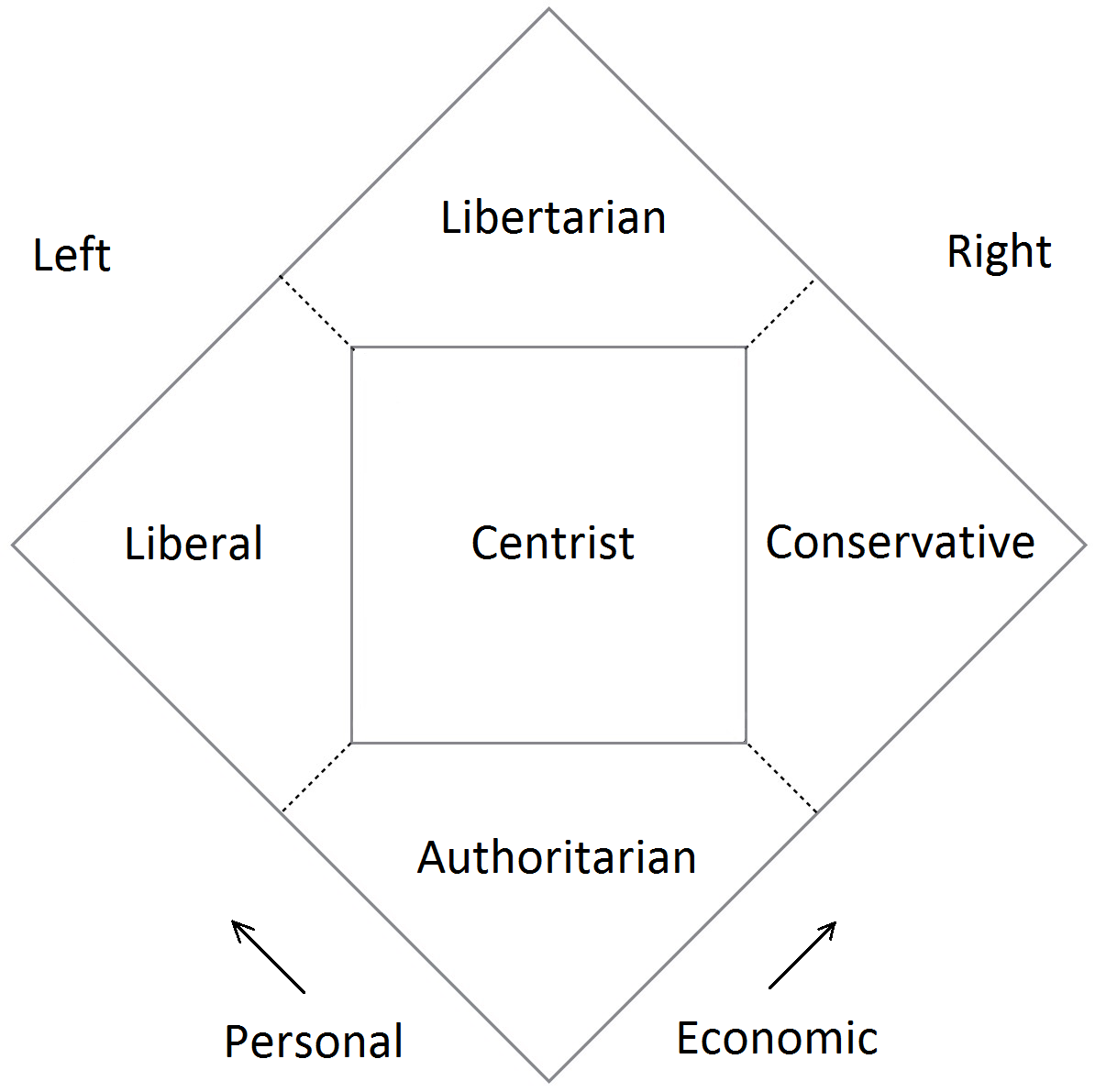

[1] Raul Hilberg, The Destruction of the European Jews (New Haven, Conn.: Yale UP, 1961).
[2] Martin Broszat, Der Staat Hitlers: Grundlegung und Entwicklung seiner inneren Verfassung(Munich: Deutscher Taschenbuch, 1969).
[3] Daniel Jonah Goldhagen, Hitler’s Willing Executioners: Ordinary Germans and the Holocaust (New York: Knopf, 1996).
[4] Christopher Browning, The Origins of the Final Solution: The Evolution of Nazi Jewish Policy, September 1939-March 1942 (Lincoln, Neb.: University of Nebraska Press, 2006).
[5] Gerald Fleming, Hitler and the Final Solution (Berkeley, Calif.: University of California Press, 1984).
[6] Documents Accuse, edited by B. Baranauskas, K. Ruksenas, and E. Rozauskas (Vilnius: Gintaras, 1970).
[7] Algirdas Martin Budreckis, The Lithuanian National Revolt of 1941 (Boston: Lithuanian Encyclopedia Press, 1968).
[8] See “Yitzhak Arad: Lithuania Wants to Grill Top Israeli Historian Over War Crimes,” History News Network, http://historynewsnetwork.org/article/42750, accessed May 15, 2017.
[9] YIVO Encyclopedia, s.v. “Lithuania,” accessed June 14, 2017, http://www.yivoencyclopedia.org/
article.aspx/Lithuania
[10] Robert van Voren, Undigested Past: The Holocaust in Lithuania (Amsterdam: Rodopi, 2011), 49.
[11] Ibid, 45, 57.
[12] Van Voren, ibid, 18-19.
[13] Ibid, 19.
[14] Michael MacQueen, “The Context of Mass Destruction: Agents and Prerequisites of the Holocaust in Lithuania,” Holocaust and Genocide Studies 12, no. 1 (Spring 1998): 29-30; Saulius Suziedelis, “The Historical Sources for Antisemitism in Lithuania and Jewish-Lithuanian Relations During the 1930,” in The Vanished World of Lithuanian Jews, edited by Alvydas Nikzentaitis, Stefan Schreiner, and Darius Staliunas (Amsterdam: Rodopi, 2004), 125-26.
[15] Suziedelis, ibid, 131.
[16] Roger Dale Petersen, Resistance and Rebellion: Lessons from Eastern Europe(Cambridge: Cambridge University Press, 2001), 86.
[17] Ibid, 92-94.
[18] Alfred Erich Senn, Lithuania 1940: Revolution From Above (Amsterdam: Rodopi, 2007), 197.
[19] Alfonasas Eidintas, “A ‘Jew-Communist’ Stereotype in Lithuania, 1940-1941,” Lithuanian Political Science Yearbook, January 2000, 3.
[20] Saulius Suziedelis, “Lithuanian Collaboration during the Second World War: Past Realities, Present Perceptions,” in “Kollaboration” in Nordosteuropa: Erscheinungsformen und Deutungen im 20. Jahrhundert, edited by Joachim Tauber (Wiesbaden, Germany: Harrassowitz, 2006), 145.
[21] Saulius Suziedelis, “Foreign Saviors, Native Disciples: Perspectives on Collaboration in Lithuania, 1940-1945,” in Collaboration and Resistance during the Holocaust: Belarus, Estonia, Latvia, Lithuania, edited by David Gaunt, Paul A. Levine, and Laura Palosuo, (Bern, Switzerland: Peter Lang, 2004), 334.
[22] Tomasz Szarota, On the Threshold of the Holocaust: Anti-Jewish Riots and Pogroms in Occupied Europe: Warsaw, Paris, the Hague, Amsterdam, Antwerp, Kaunas, translated by Tristan Korecki (New York: Peter Lang, 2015), 161-62.
[23] Ulrich Dörtenbach, Memorandum to Reinhard Heydrich, memorandum, July 19, 1939, Nuremberg Document 2592-PS, Nazi Conspiracy and Aggression, Volume V, Library of Congress, Washington, DC, 655-56.
[24] Reinhard Heydrich, Memorandum to Joachim von Ribbentrop, memorandum, July 29, 1939, Nuremberg Document 2953-PS, Nazi Conspiracy and Aggression, Volume V, Library of Congress, Washington, DC, 657-58.
[25] Bulletin No. 92 from the Lithuanian State Security Department, bulletin, April 15, 1939, in Documents Accuse, edited by B. Baranauskas, K. Ruksenas, and E. Rozauskas (Vilnius: Gintaras, 1970), 62.
[26] Budreckis, ibid, 31-32, 46.
[27] Yosef Gar, Umkum fun der Yidisher Kovne (Munich: Farband fun Litvishe Yidn in der Amerikaner Zone in Daytschland, 1948), 34, translation mine.
[28] Szarota, ibid, 177-78.
[29] Reinhard Heydrich, “Ereignismeldung UdSSR (EM) 14,” July 6, 1941, Record Group 14, 101M.0082, United States Holocaust Memorial Museum, Washington, DC, 3.
[30] Szarota, ibid, 183 note 34.
[31] Christoph Dieckmann and Saulius Suziedelis, Okupacija Ir Aneksija: Pirmoji Sovietine Okupacija, 1940-1941 = Occupation and Annexation : the First Soviet Occupation. Totalitariniu rezimu nusikaltimai Lietuvoje (Vilnius: Margi Rastai, 2006), 37.
[32] Ibid, 42 note 134.
[33] Reinhard Heydrich, “EM 12,” July 4, 1941, Record Group 14, 101M.0082, United States Holocaust Memorial Museum, Washington, DC, 3.
[34] Avraham Tory, Martin Gilbert, and Dina Porat, Surviving the Holocaust: The Kovno Ghetto Diary (Cambridge, MA: Harvard University Press, 1990), 4.
[35] Gar, ibid, 39, translation provided by Christoph Dieckmann.
[36] Dieckmann and Suziedelis, ibid, 41.
[37] Ibid, 34.
[38] Ibid, 35.
[39] Reinhard Heydrich, “EMR 8,” June 30, 1941, Record Group 14, 101M.0082, United States Holocaust Memorial Museum, Washington, DC, 2.
[40] Budreckis, ibid, 75.
[41] Szarota, ibid, 205-06.
[42] Dieckmann & Suziedelis, ibid, 30-31.
[43] Suziedelis, “Lithuanian Collaborators,” ibid, 157.
[44] Suziedelis, “Lithuanian Collaborators,” ibid, 156.
[45] Tory, ibid, 11.
[46] Reinhard Heydrich, EM 19.” July 11, 1941. Record Group 14, 101M.0082. United States Holocaust Memorial Museum, Washington, DC, 4.
[47] Dieckmann & Suziedelis, ibid, 58.
                [48]Reinhard Heydrich, “EM 40.” August 1, 1941. Record Group 14, 101M.0082. United States Holocaust Memorial Museum, Washington, DC, 6-7, translation mine.
                [49]Reinhard Heydrich, “EM 54.” August 16, 1941. Record Group 14, 101M.0082. United States Holocaust Memorial Museum, Washington, DC, 7, translation mine
[50] Szarota, ibid, 162.
[51] Budreckis, ibid, 96-97.
[52] Quoted in Karlis Kangeris, “Kollaboration vor der Kollaboration? Die baltischen Emigranten und ihre ‘Befreiungskomitees’ in Deutschland 1940/41,” in Okkupation Und Kollaboration (1938-1945): Beiträge Zu Konzepten Und Praxis der Kollaboration in der Deutschen Okkupationspolitik, edited by Werner Röhr (Berlin: Hüthig Verlagsgemeinschaft, 1994), 184, translation mine.
                [53]Budreckis, ibid, 121-24.
                [54]Christoph Dieckmann, Deutsche Besatzungspolitik in Litauen, 1941-1944, vol. 1 (Göttingen, Germany: Wallstein, 2011), 445-47, translation mine.
[55] Reinhard Heydrich, “EM 35.” July 11, 1941. Record Group 14, 101M.0082. United States Holocaust Memorial Museum, Washington, DC, 2.
[56] Eric Haberer, “Intention and Feasibility: Reflections on Collaboration and the Final Solution,” East European Jewish Affairs 31, no. 2 (2001): 65.
[57] Jonas Fledzinskis, “Report of the Director General of the Lithuanian Economics Ministry, J. Fledzinkis [sic], regarding the occupation of Lithuania and statistical data regarding Jews in Lithuania, Germany and Vienna, 1941-1942.” February 2, 1942. Record Group O.82, File Number 4. Baltic Countries Collection. Yad Vashem Digital Archive, Jerusalem, 46, translation mine (original in German).
[58] Karl Jager, “Gesamtaufstellung der im Bereich des EK.3 bis zum 1. Dez. 1941 durchgeführten Exekutionen,” December 1, 1941, accessed May 1, 2017, http://phdn.org/archives/holocaust-history.org/works/jaeger-report/htm/img001.htm.en.html, translation by Gord McFee
[59]Haberer, ibid, 74-75.

Historiography of the Holocaust in Lithuania

There are essentially three trajectories in the historiography of the Holocaust in Lithuania that characterize the writing about the topic over the past seventy years: the transition from intentionalism to functionalism; the increasing availability of archival documents; and the issue of Lithuanian guilt. Our understanding of the Holocaust at large is one that has been more shaped by functionalism than intentionalism at least since the 1990s when, not coincidentally, archival materials from the former Soviet Union first became broadly available. In addition, while Soviet control of postwar Lithuania discouraged an honest discussion of the Holocaust there, the last twenty-five years have been characterized by vociferous debate.
The intentionalist point of view, expressing the idea that the Nazis came to power with the intention of exterminating the Jews of Europe, was predominant in the historiography of the Holocaust until 1961. The functionalist viewpoint, which states that extermination was a decision reached gradually and in the summer of 1941 at the earliest, began to emerge in the literature when Raul Hilberg published The Destruction of the European Jews in 1961.[1]Hilberg theorized that the far-flung bureaucracy of Nazi Germany and competition among various ministries, the party, and the SS resulted in a gradual movement toward genocide. Martin Broszat’s Der Staat Hitlers,[2] published in 1969, while not limited to the Holocaust, nevertheless argued that Nazi Germany, rather than being an autocratic state, was a polycracy that pushed forward and concretized vague agendas.
The debate between intentionalism and functionalism raged mostly during the 1970s and 1980s, with the assumptions of moderate functionalists beginning to receive confirmation with increased access to Soviet archives. Daniel Goldhagen’s Hitler’s Willing Executioners,[3] published in 1996, was likely the final gasp of radical intentionalism. Goldhagen’s thesis of an “eliminationist anti-Semitism” lying at the heart of the National Socialist project, was greeted mostly by derision. The prevailing functionalist viewpoint on the origins of the Holocaust is most succinctly stated in Christopher Browning’s The Origins of the Final Solution,[4] published in 2006. Browning sees key roles for independent initiative and “cumulative radicalization” in the evolution of Nazi genocide.
As noted, the increasing availability of sources was essential to the shift from intentionalism to functionalism. Some of these documents became available before 1991 and the disintegration of the USSR; e.g., the so-called Jäger Report, which describes in painstaking detail the course of the Holocaust in Lithuania through December 1, 1941, was only provided by Soviet authorities in 1963 – four years after Karl Jäger’s suicide while awaiting trial. Given the extent to which the document corroborates the notion of cumulative radicalization, it is not surprising that Browning’s theory could only be truly supported documentarily with access to Soviet archives.
In addition, Gerald Fleming’s Hitler and the Final Solution, published in 1984,[5]was among the first works by a western historian to incorporate Russian archival material. Although Fleming tended to take an intentionalist view of the Holocaust, his work nevertheless presaged the watershed of Soviet documents that entered the research a decade later. Fleming’s own work was not focused specifically on Lithuania but rather on Latvia; however, given the related policies implemented in these bordering countries, Fleming’s research boded well for the future of knowledge about the Holocaust in the Baltic States.
There are obviously numerous reasons for the desire of the Soviets to limit access to archival documents. The reasons that are relevant to the Holocaust in Lithuania are essentially two: first, a desire to suppress the specifically Jewish nature of the vast majority of the victims of the Nazis in the Baltics so that a mythos of fascist aggression and the Soviet peoples at large could be promoted; and second and more important to this analysis, an impulse to suppress nationalism across the Soviet Union but especially in the Baltic States, the incorporation of which into the USSR was highly contested by both the countries themselves and the outside world.
The Soviets’ offensive against Lithuanian nationalism was largely accomplished through the painting of all Lithuanian nationalists as collaborators with the Nazis in their crimes against humanity.  For instance, while it presents a collection of extremely important documents for understanding the Holocaust in Lithuania, the volume Documents Accuse,[6] published in 1970 under the auspices of the government of the Lithuanian SSR, offers virtually no nuance in distinguishing blameless elements of the Lithuanian nationalist movement from those who committed war crimes. Conversely, the roughly contemporaneous book published in 1968 by the Lithuanian-American historian Algirdas Budreckis, The Lithuanian National Revolt of 1941,[7] which specifically treats the period during which spontaneous violence by Lithuanian committed against Jews was most common, glosses over this violence in fewer than ten pages and essentially ascribes it to a few bad apples.
            This tension in the historiography was of course reflective of that between Lithuania and the USSR itself; it is little wonder, therefore, that Lithuania was among the first republics to declare its separation from the Soviet Union. As noted, the dissolution of the USSR resulted in an abundance of newly available documents, but this watershed of evidence has not abated the intensity of the debate over Lithuanian collaboration. While many Lithuanian historians have undertaken honest attempts to investigate the issue of Lithuanian collaboration in the Holocaust, others have espoused a theory of “double genocide,” which alleges that the Soviet occupations of 1940-41 and 1944-1991 were as bloody and genocidal as that of the Nazis.
Related to this dispute is the issue of Jewish collaboration with the Soviet occupation in 1940-41, which remains contentious due to its connection to anti-Semitic propaganda from the 1930s and 1940s. Perhaps the most controversial development regarding this aspect of the debate was the suggestion that the Lithuanian-born Israeli Holocaust historian Yitzhak Arad be prosecuted by the Lithuanian government for war crimes on the basis of his membership in a Soviet partisan group during the war.[8] Also central among the disputes today is the extent to which violence committed by Lithuanians against Jews, particularly the street violence and pogroms of the first few weeks of the Nazi occupation, was spontaneous or was directed behind the scenes by the German occupation authorities. This dispute is similarly unresolved.
In conclusion, the complexity of the historiography of the Holocaust in Lithuania has not decreased with time. The contributions to this complexity of the intentionalist/functionalist debate and of geopolitical changes in eastern Europe should not be underestimated. However, the key factor complicating a fuller understanding of this difficult topic is the issue of Lithuanian guilt via collaboration, which has erupted in the last quarter century after being assumed, if not assured, by heavily biased Soviet historians. There is still much to learn about this subject, but the ferocity of the current debate has at least generated an impressive amount of source material, aiding significantly our attempts to attain a better understanding of this history.


[1] Raul Hilberg, The Destruction of the European Jews (New Haven, Conn.: Yale UP, 1961).
[2] Martin Broszat, Der Staat Hitlers: Grundlegung und Entwicklung seiner inneren Verfassung(Munich: Deutscher Taschenbuch, 1969).
[3] Daniel Jonah Goldhagen, Hitler’s Willing Executioners: Ordinary Germans and the Holocaust(New York: Knopf, 1996).
[4] Christopher Browning, The Origins of the Final Solution: The Evolution of Nazi Jewish Policy, September 1939-March 1942 (Lincoln, Neb.: University of Nebraska Press, 2006).
[5] Gerald Fleming, Hitler and the Final Solution (Berkeley, Calif.: University of California Press, 1984).
[6] Documents Accuse, edited by B. Baranauskas, K. Ruksenas, and E. Rozauskas (Vilnius: Gintaras, 1970).
[7] Algirdas Martin Budreckis, The Lithuanian National Revolt of 1941 (Boston: Lithuanian Encyclopedia Press, 1968).
[8] See, e.g., “Yitzhak Arad: Lithuania wants to grill top Israeli historian over war crimes,” History News Network, http://historynewsnetwork.org/article/42750, accessed May 15, 2017.

A Podcast About Holocaust Denial

I’ve been incommunicado at this blog for some time, since I’ve not been enrolled in a history course this term. (Instead, I’ve been fulfilling a core requirement in Interdisciplinary Studies — a course on wellness, which is surprisingly interesting.) However, I gave an interview a couple of months ago to Matthew Buckley of Adelaide, Australia, who runs a podcast called Social Justice Warriors. You can listen to the podcast here.

I’ll be back blogging regularly next month.

The Army, the Interior Department, and the Wounded Knee Massacre

            On December 29, 1890, at least 150 Native Americans of the Miniconjou Lakota people, including 89 women and children, were massacred by troops from the U.S. 7th Cavalry Regiment under the command of Colonel James Forsyth. As news of the massacre spread east from Wounded Knee Creek on the Pine Ridge Indian Reservation in South Dakota where it occurred, different versions of the events, told respectively by members of the military, agents of the Office of Indian Affairs (within the Department of the Interior), and the media, emerged depending on the sources and recipients of information. By early the following year, the prevailing opinion about the massacre was that it had been a justified response to aggression by the Sioux. Public opinion and political repercussions were instrumental in resolving the issue of responsibility for the Wounded Knee massacre largely in favor of the version propagated by the military, rather than the more sympathetic version presented by the Department of the Interior.
            The Army’s version of events underwent its own evolution. The person who served as the source of information to Washington was General Nelson Miles, Commander of the Division of Missouri, although he was not present at Wounded Knee. His initial telegraph, to Army Commander-in-Chief John Schofield, reports “severe loss” on the part of the Lakota, which, he states, “may be a wholesome lesson to the other Sioux” and “may possibly bring favorable results” (Miles, 2015a, para. 1). However, the next day, Miles telegraphed Brigadier General John Brooke, commanding officer of the Army of the Platte, seemingly angry with the events at Wounded Knee, stating, “Some one [sic] seems to be suppressing facts” and that “Whatever the circumstances of that fight with Big Foot [i.e., Spotted Elk, chief of the Miniconjou and killed at Wounded Knee] may be it must have had the effect of increasing the hostile element very largely” (Miles, 2015b, para. 2).
Over the next few days, General Miles conferred with Schofield as an investigation began into the actions of Colonel Forsyth. On January 2, 1891, three days after the massacre, Schofield told Miles on behalf of Secretary of War Redfield Proctor, “He [President Harrison] hopes that the report of the killing of women and children in the affair at Wounded Knee is unfounded, and directs that you cause an immediate inquiry to be made and report the results to the Department. If there was any unsoldierly conduct, you will relieve the responsible officer, and so use the troops engaged there as to avoid its repetition” (Schofield, 2015, para. 8). A board of inquiry was established on January 4, and Miles relieved Forsyth of his command. By this point, Miles had already learned that a burial party that he had commanded to go to Wounded Knee, led by Major Samuel Whitside, had interred 146 Indians at the creek, including dozens of women and children (Russell, 2015, para. 11).
Within two weeks, however, the inquiry was over, and Colonel Forsyth had been reinstated, over the objections of General Miles and likely due to the testimonies of the soldiers under Forsyth’s command. Forsyth would go on to be promoted to brigadier general. By the time President Benjamin Harrison reported on the massacre in his State of the Union Address, the notion that the U.S. troops under Forsyth might have committed crimes against humanity had been effectively buried. While acknowledging that the Lakota had valid complaints about rations and other provisions, Harrison nevertheless stated, “the Sioux tribes are naturally warlike and turbulent, and their warriors were excited by their medicine men and chiefs, who preached the coming of an Indian messiah who was to give them power to destroy their enemies.” General Miles, the President wrote, “is entitled to the credit of having given thorough protection to the settlers and of bringing the hostiles into subjection with the least possible loss of life” (Harrison, 1891, para. 82).
Indeed, by the time General Miles wrote his annual report for Secretary Proctor at the end of 1891, even the general himself was more concerned with placing the events within the context of the larger effort to get the Indians to come to the reservations and how the massacre delayed the achieving of that goal. He refers twice to the massacre explicitly. The first mention is brief: “The unfortunate affair at Wounded Knee Creek December 29, 1890, in which 30 officers and soldiers and 200 Indians (men, women, and children) were killed or mortally wounded, prolonged the disturbance and made a successful termination more difficult” (Miles, 2013, para. 4) The second, in contrast, is more lengthy:
The result may be summed up in the loss of nearly 200 people, delay in bringing the Indians to terms, and caused 3,000 Indians to be thrown into a condition of hostility with a spirit of animosity, hatred, and revenge. The spirit thus engendered made it more difficult to force back, or restore the confidence of the Indians, and for a time it looked as if the difficulty would be insurmountable. (Miles, 2013, para. 9)
In neither case, however, does Miles indicate that the fault for the massacre lay with the Army, although he notes that the commander office (Forsyth) was relieved of his command. This report is more or less Miles’s final word on the massacre, and it is remarkable for its nondescript nature.
            In contrast, the annual report of the Office of Indian Affairs for 1891 is remarkable for what it says about the massacre and the victims. The first mention of the massacre occurs in the main part of the report, in a section discussing the Sioux uprising at large. The commissioner (Thomas J. Morgan) refers to the “fighting” as “short, sharp [and] indiscriminate,” and then continues, “The bodies of women and children were scattered along a distance of two miles from the scene of the encounter,” before finally referring to the Indians that fled as “frightened and exasperated” (Morgan, 1891, p. 130). The reader is further referred to an appendix of three pages of testimonies of Miniconjou survivors.
In the section of the report on South Dakota, the massacre is mentioned again. After detailing the campaign to get the Indians on the reservations and conceding that the reports of the massacre have been conflict, the agent for the state writes about the Indians killed, “As this band of Indians were on their way to the Pine Ridge Agency headquarters it is not probable that any hostility was intended” (Morgan, 1891, p. 390). Why was the likely peaceable nature of the Miniconjou killed at Wounded Knee not included in Miles’s report?
According to historian Heather Cox Richardson (Boston College), the differences between the accounts of the Interior and War departments were emblematic of a struggle for power over Indian affairs between the two departments. In her book, Richardson argues that the Commission of Indian Affairs, as part of the Department of the Interior, was motivated largely by political patronage; “its officers,” she writes, “[…] dispensed the valuable government jobs and lucrative contracts for Indian supplies to political supporters. By siding with reformers on the issue of managing the Indians, politicians kept this significant patronage power in their own hands” (Richardson, 2010, p. 47).
The Democratic administration under President Grover Cleveland had staffed the commission with agents sympathetic to the Sioux, but when the administration became Republican in 1889, the filling of positions with patronage jobs resulted in the hiring of agents fearful of Indians and ignorant of Indian culture. Nevertheless, upper-level positions continued to be staffed by more sympathetic people, and commissioner Morgan was among them, while Secretary Noble, a Harrison administration man, was more comfortable calling in the military, despite longstanding rivalry between the departments over who should manage Indian affairs. Conversely, the War Department, staffed with men with years of experience both fighting and negotiating with Indians and who felt a grudging respect for Native Americans, was more likely to be halting in the use of force. The result was that hostile agents and raw field officers were responsible for the massacre; in turn, more sympathetic senior officeholders within the interior department sought to exculpate the Indians, while the senior War Department leadership sought to keep the Army’s reputation clean.
            Another part of the answer lies in the two departments’ sources of information. Whereas the Army report relied almost entirely on the testimony of soldiers in the Army unit at Wounded Knee, with the only testimony of Indians that of scouts in the employ of the Army, the Interior Department’s information, as noted, came from Miniconjou who witnesses the massacre. As a result, the disposition of the Indians at Wounded Knee as not aggressive and as victims was more effectively communicated. The final part of the answer, and that which bears specifically on why President Harrison’s statement so closely reflected the official account of the Army, has to do with the media.
            Newspapers had been escalating public concern about the Lakota for months, specifically regarding the Ghost Dance religion that had inspiring the less assimilationist Sioux and motivating their resistance to some extent. For example, an article from November 22, 1890, in the Daily Tobacco Leaf Chronicle, published in Clarksville, Tenn., reported that Indians at Wounded Knee Creek were “still carrying on their dances and that they had heard of the arrival of the military, but what is of much more importance to the agents is they have strapped on their guns and are dancing fully armed” (“More Serious,” 1890, p. 1).
The American Studies scholar Christina Klein (also of Boston College) has identified the journalist William Fitch Kelley as a major culprit regarding the role of the press. Arguing that Kelley’s writing was part of a larger narrative that sought to subordinate the Sioux to a larger cultural order and narrative of stability in the face of widespread social upheaval, Klein writes, “For Kelley, the military represented the forces of order and the rebellious Indians the forces of chaos. In contrast to the tightly-disciplined army, the hostile Indians sowed mayhem among themselves and throughout the entire area” (Klein, 1994, p. 52). Kelley’s reportage was marked by grossly biased characterization of the Sioux and rank favoritism of the Army’s version of events. In this regard, and in so far as Kelley’s reports were representative, newspaper reports generally reflected the public’s opinion of the Lakota.
President Harrison’s response, therefore, can be seen as the culmination of several factors, including the competing versions of the events of the massacre between the interior and war departments, not to mention within the Army itself, as well as the public opinion, as enunciated in the newspapers, that the Indians were to blame. On the one hand, Harrison’s report acknowledges the complaints of high-level Interior personnel about the privations that the Lakota faced. On the other hand, the report simultaneously exculpates the Army of any wrongdoing, thus vindicating the version of the President’s own appointees at the top of both departments. Nevertheless, Indian affairs remained the province of the Department of the Interior. When President Harrison lost re-election to Grover Cleveland in November 1892, the issue past back to an administration that viewed itself as reformist.
In conclusion, the Wounded Knee Massacre was largely the result of inexperienced field officers the Commission of Indian Affairs and the Army. Because the departments of Interior and State relied on different witnesses, their versions of events at the Wounded Knee Massacre differed as well. The authoritative version as communicated to the people by President Harrison more closely resembled the accounts in newspapers and in the Army’s accounts, although the President conceded that the Sioux had legitimate grievances. In this regard, the “official” version was shaped both by the media’s treatment of the massacre and by the desire of upper-level cabinet officials to shield the administration.


References
Harrison, B. (1891, December 9). State of the Union Address. Speech presented in Washington,
D.C. Retrieved February 1, 2017, from http://millercenter.org/president/bharrison/
speeches/speech-3767
Klein, C. (1994). “Everything of Interest in the Late Pine Ridge War Are Held by Us for Sale”:
Popular Culture and Wounded Knee. The Western Historical Quarterly, 25(1), 45-68.
Miles, N. (2013, August 19). Annual Report of Major General Miles. Retrieved February 1,
Miles, N. (2015a, September 27). [Telegraph sent December 30, 1890, to Commander in Chief
John Schofield]. Retrieved February 1, 2017, from https://armyatwoundedknee.com/wounded-knee-investigation/
Miles, N. (2015b, September 27). [Telegraph sent December 31, 1890, to Brigadier General John
Brooke]. Retrieved February 1, 2017, from Miles, N. (2015, September 27). Retrieved February 1, 2017, from https://armyatwoundedknee.com/wounded-knee-investigation/
More Serious — Indians Continue to Indulge in Ghost Dance. (1890, November 22). Daily
Tobacco Leaf-Chronicle, p. 1. Retrieved February 1, 2017, from http://chroniclingamerica.loc.gov/lccn/sn88061072/1890-11-22/ed-1/seq-1/#date1=1836&index=15
Morgan, T. J. (1891). Annual report of the commissioner of Indian affairs, for the year 1891
(Vol. 1, Rep.). Washington, DC: GPO.
Richardson, H. C. (2010). Wounded Knee: Party Politics and the Road to an American
Massacre. New York, NY: Basic Books.
Russell, S. (2015, September 27). Wounded Knee investigation. Retrieved February 1, 2017,
Schofield, J. (2015, September 27). [Telegraph sent January 1, 1891, to General Nelson Miles].

Boston Busing Crisis

I agree that, in the long run, busing helped Boston because it desegregated the school system, providing equal educational opportunity for minority students, and set the stage for racial healing and an improved racial climate in the twenty-first century.

Regarding school desegregation, a ruling of the United States Court of Appeals for the First Circuit in 1987 found that school desegregation had been successful. they based this decision on three factors: that the number of single-race schools had decreased; that good faith had been exercised in the attempts by the School Board to desegregate; and that desegregation had been implemented to the greatest extent possible. On the third point, the court remarked, “Little in the record […] suggests that implementation beyond what presently exists is likely to be obtained.” On the basis of the court’s observation, we can conclude that desegregation was successful.

The second point is dependent on the first; i.e., successful school desegregation by its very nature guarantees that there will be equal educational opportunity for minority students. While metrics for equal opportunity are difficult to quantify, two statistics offered in the textbook provide some substantiation. First, the dropout rate among Boston high school students decreased to below the national average; second, the college graduation rate among alumni of Boston high schools tripled over the same period. These data provide sound proof of an improved educational situation. If the lack of segregation can be considered proof of equal opportunity, then opportunity not only was extended but actually improved.[1]

Finally, racial healing and an improved racial climate did in fact emerge after school desegregation in Boston. Here, the political career of Mayor Ray Flynn is instructive. As noted in the text, Flynn was able to secure a successful citizen referendum on replacement of the elected school board, which had been the locus of resistance to desegregation during the busing crisis. That voters would approve such a measure is indicative that the worst of bad feelings had passed. Although there are occasional outbursts of racism as there sadly are in most areas of the United States, these incidents are less common, and racial violence has virtually disappeared.

=====

     [1] Morgan v. Nucci, 831 F.2d 313 (1st Cir. 1987), accessed February 6, 2017, http://law.justia.com/cases/federal/appellate-courts/F2/831/313/398470/

The King Assassination and Black Nationalism Ascendant

The effect of the assassination of Rev. Dr. Martin Luther King Jr. on the civil rights movement was profound because Dr. King was the most visible and most politically “acceptable” of the leaders of the movement to white Americans. There were a variety of consequences to his assassination, which were both immediate and more remote. For instance, in the immediate aftermath of Dr. King’s assassination, there were riots in the inner cities across the country, as simmering anger at continuing conditions of racial oppression exploded in rage at the assassination. President Lyndon Johnson mobilized the National Guard the day after the assassination and largely suppressed further rioting, although sporadic violence continued into the following month.

A more remote effect was a shift in the tactics of the remaining leaders in the civil rights movement. Although Dr. King’s widow Coretta Scott King and his closest associates urged a non-violent response to the assassination, younger leaders in the movement saw in King’s murder the end of civil disobedience and the beginning of armed struggle. The ascendance of the Black Panther Party, which had existed before King’s assassination, into a leading role in the struggle for black liberation is a clear effect of the assassination, and the willingness of the Black Panthers to use violence in self-defense arguably caused a dramatic shift in the civil rights movement from that point forward.

Although it is unclear whether there would have been this evolution in the civil rights movement without Dr. King’s murder, it is fairly clear that it would have happened more slowly, if at all. As noted, the Black Panthers were already in operation in 1968, and they had been preceded by more militant and separatist organizations willing to use violence, including the Nation of Islam. King himself had warned in his “Letter From Birmingham Jail” in 1964 that the failure of white Americans to embrace a moderate such as himself might result in the ascent of black radicals and nationalists, and he mentioned the Nation of Islam specifically in this context.

Moreover, it is often forgotten that Dr. King was assassinated the night before he intended to support striking sanitation workers in Memphis, Tennessee. It is therefore often forgotten that the civil rights movement under King’s leadership might have moved in a direction of social justice more aligned with a struggle for economic justice. Although this theme was always present in Dr. King’s work and in his rhetoric, it is possible that the movement-wing tack after April 1968. Although many in the more militant black nationalist movements of the late 1960s and early 1970s embraced Marxism, they failed to achieve recognition among the older generation of activists who rejected violence even in self-defense.

Finally, I would argue that the rejection of non-violence by the civil rights movement following Dr. King’s assassination was a necessary factor in its ultimate successes. Although most of the work had been done in securing voting rights for Southern African-American voters by the time of King’s murder, and the Fair Housing Act was signed by President Johnson merely a week after the former’s death, the issues of police brutality in the inner cities across the country and particularly in Los Angeles might have remained issues unknown to many Americans without the visible responses of the Black Panthers. Although these are issues that obviously still pertain to the African-American experience in the United States to some extent, the days of military-style assault on black neighborhoods by police are largely a thing of the past, thanks in no small part to the armed resistance of the Black Panthers.

Design a site like this with WordPress.com
Get started